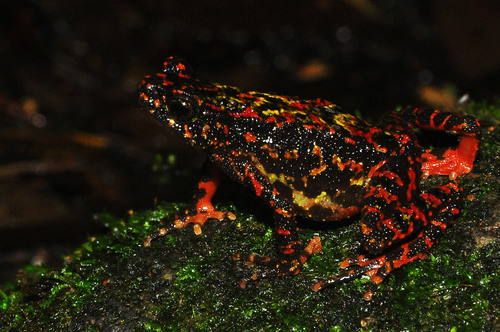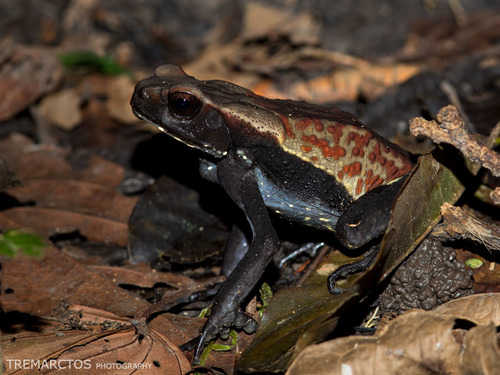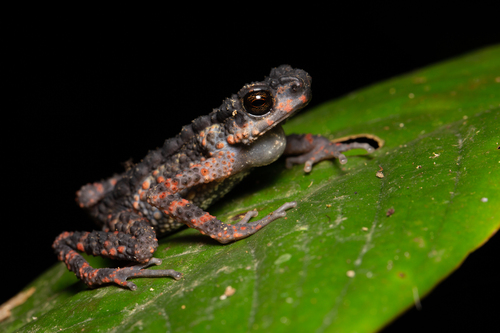
About Ansonia spinulifer (Mocquard, 1890)
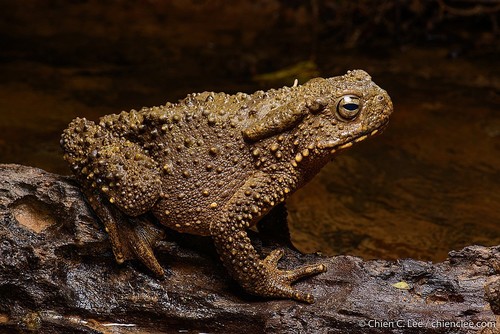
Ansonia spinulifer males measure 30–40 mm (1.2–1.6 in) in snout–vent length, while females can reach up to 45 mm (1.8 in). The tympanum is visible. The dorsum has large spinose warts, and usually has a light spot between the shoulders. These large warts have keratinized projections, which is the source of the species' name. Tadpoles of this species have the characteristic sucker mouth found in rheophilous Ansonia tadpoles. Its natural habitats are lowland rainforests located at elevations of 150–750 m (490–2,460 ft) above sea level. Adult Ansonia spinulifer range widely across the forest floor and herb stratum in areas with steep terrain, but breeding requires small, clear, rocky-bottomed streams. Males call at night while perched in low vegetation near streams. Tadpoles live in torrents, where they cling to rocks and feed on lithophytes. Ansonia spinulifer is common in Sarawak, but it does not appear to be able to adapt to modified habitats. It is threatened by habitat loss caused by deforestation, associated stream siltation, and conversion of land to plantations.