About Ansonia leptopus (Günther, 1872)
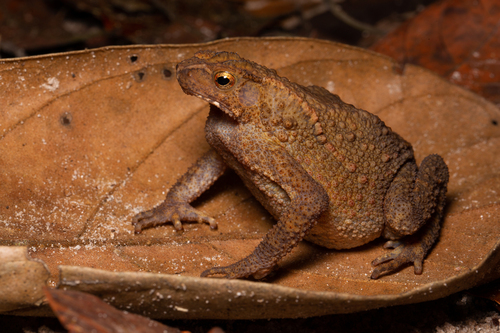
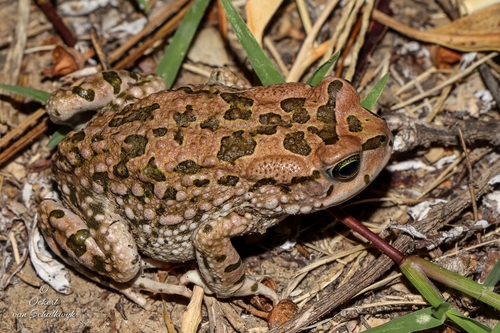
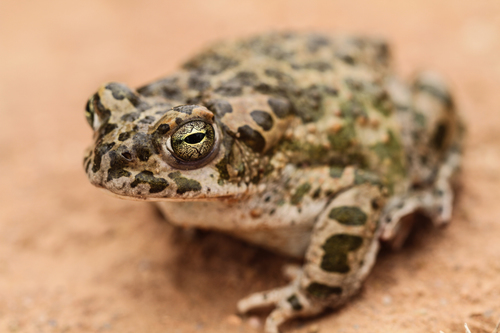
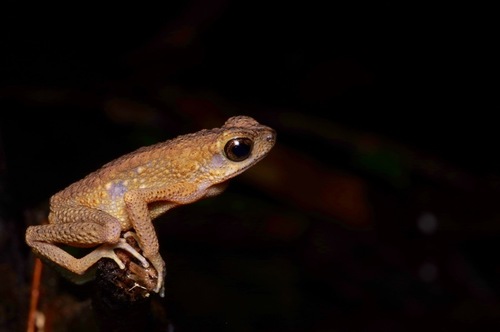
In terms of body size, male Ansonia leptopus measure 30–40 mm (1.2–1.6 in) in snout–vent length, while females can reach up to 55 mm (2.2 in) in this measurement. The dorsum of this species is covered in low warts, and individuals have brown or yellow spines under the mandible. Males have dark brown nuptial pads. The tadpoles of Ansonia leptopus are small, measuring less than 20 mm (0.79 in), and have distinctive black markings over a light-colored background. Their oral sucker is less well-developed than that of tadpoles of other species in the Ansonia genus. This species lives in primary rainforest as its natural habitat. Adult Ansonia leptopus are widely spread across the forest floor and herb layer. At night, calling males can be found resting on boulders and rocks along river banks. Breeding is explosive, and occurs in small, clear, rocky-bottomed streams. Tadpoles are most frequently found in shallow side pools and submerged dead leaf beds. Ansonia leptopus is threatened by habitat loss caused by deforestation, which also leads to siltation of the streams the species uses for breeding.