About Anomia simplex d'Orbigny, 1853
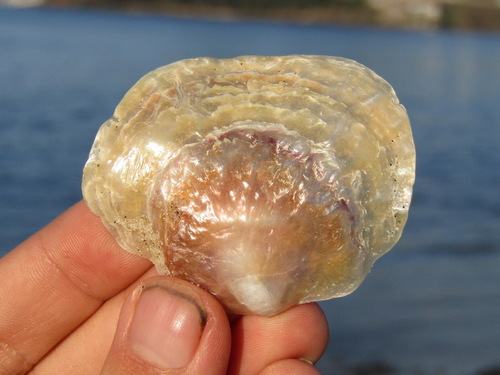
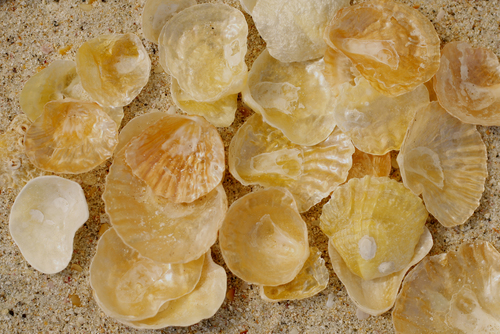
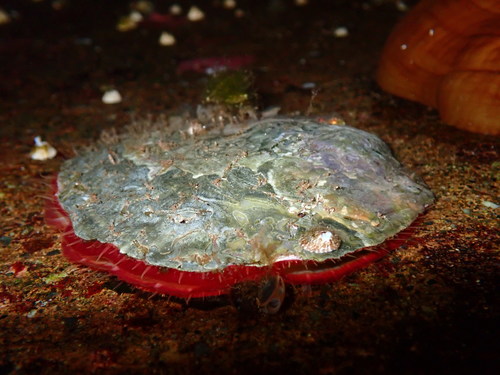
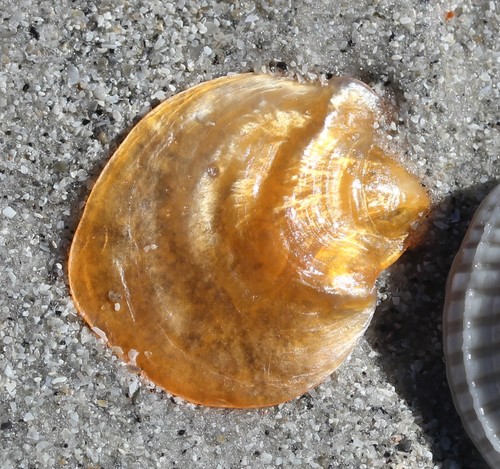
Anomia simplex d'Orbigny, 1853 is a species of bivalve mollusk in the Anomiidae family. This family of saltwater bivalves contains around 7 genera, including the genus Anomia that this species belongs to. Members of the Anomiidae family are most well known for their extremely thin, often translucent, paper-like shells. These shells have been used in the manufacture of glue, chalk, paints, and other materials. Despite the thin, translucent structure of their shells, the shells are very strong and withstand many environmental pressures on hard substrates. Anomia simplex is commonly known by several common names: common jingle shells, gold shells, and Mermaid's Toenails. The nickname 'jingle shell' comes from the jingle sound that groups of these shells make when carried in a container and shaken. Strung together on the coast, these shells also produce a characteristic chime when moved by wave action. The name 'common jingle shell' refers to the species' relative abundance across coastal regions, making it a very common shell to encounter. Physically, Anomia simplex grows to between 1 and 3 inches in size. A key feature of its bivalve structure is that the upper and lower valves are dissimilar. The lower valve is always off-white, while the upper valve can range in color from shiny lemon yellow and golden to brown, silvery black, and pale buff. This species retains its characteristic iridescence long after death. Common jingle shells have thin shells that range in shape from roughly circular to broadly oval. The shell is typically translucent and smooth, with growth lines that mirror the shape of the substrate the mollusk lived on. This species can be found year-round in shallow waters, including estuaries, bays, and beaches, from the low tide line down to 30 feet deep. It occurs along the Atlantic coast of the Americas, from the coast of Nova Scotia in the north all the way to the coast of Brazil in the south, and it is densely abundant on the Atlantic Coast of North America. It is often found living alongside other organisms in oyster beds, attached to other mollusk shells. For habitat, these bivalve mollusks attach themselves to hard underwater objects for structure, including other shells, oyster beds, and rocky hard substrates. The lower valve anchors the mollusk to the substrate, where it spends most of its life feeding as a filter feeder. Because of this lifestyle, the species needs to anchor itself in a productive, nutrient-rich environment to support long life.