About Anomia ephippium Linnaeus, 1758
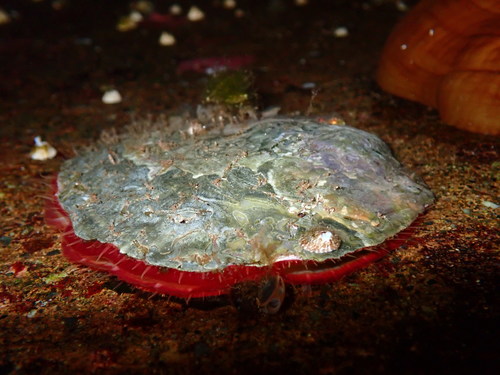
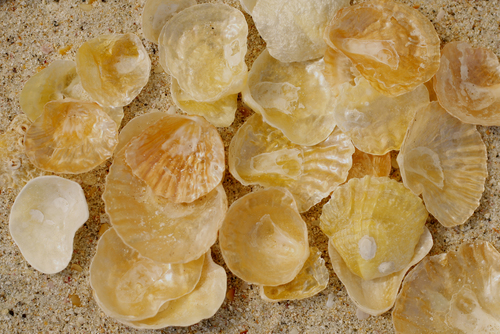
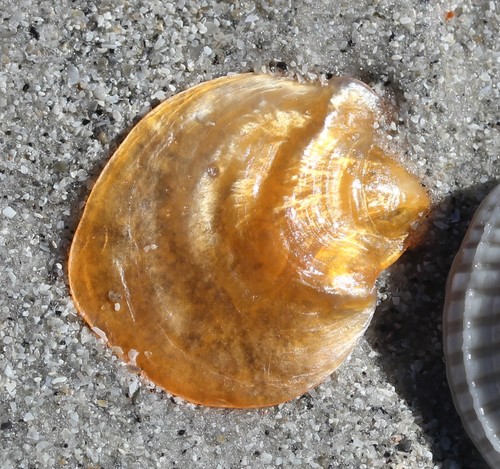
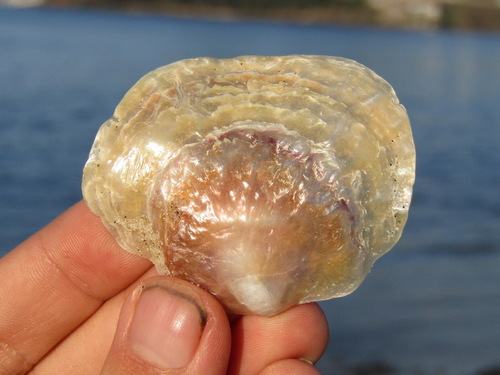
Anomia ephippium is a species of bivalve in the family Anomiidae. It is a benthic species found primarily in sheltered conditions in the low intertidal and sublittoral zones, at depths ranging from 25 to 200 meters. The species is distributed along coasts around the world. In the British Isles, it occurs on the South and West coasts of Britain, extending north to Shetland, and along all coasts of Ireland. On the Atlantic coast of the United States, it ranges from Massachusetts to Florida, and is commonly found in the Woods Hole region of Massachusetts. Specific information on the reproductive strategies of Anomia ephippium is currently unavailable. As jingle shells, members of this species reproduce via spawning: during summer, gametes are released into the water column, and fertilization occurs in the mantle cavity. Most bivalves are gonochoric, meaning they have two distinct separate sexes, though some are protandric hermaphrodites that can change sex over the course of their growth. After fertilization, Anomia ephippium begins its life cycle at the embryonic stage. Embryos develop into free-swimming trochophore larvae. After the larval stage, the species develops into a bivalve veliger, which resembles a miniature clam.