About Anolis evermanni Stejneger, 1904
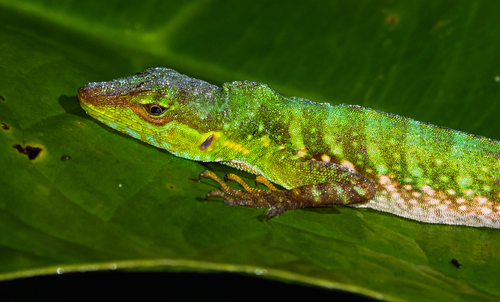
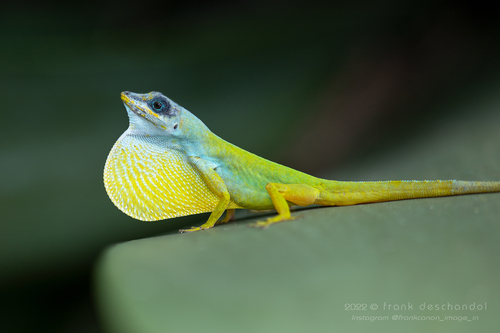
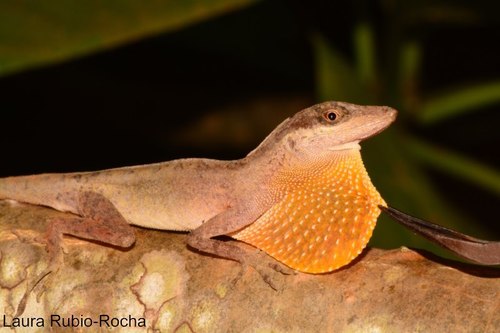
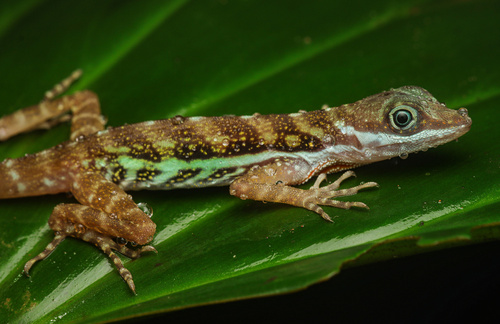
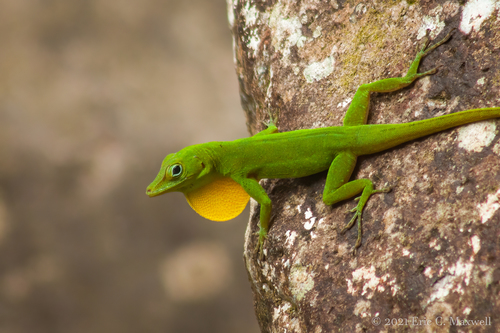
Anolis evermanni Stejneger, 1904 is a medium-sized anole that is typically bright emerald-green, but can shift to dark brown when aroused. Males are usually larger than females: males have a snout-to-vent length of 7 cm (2.75 in), while females have a snout-to-vent length of 4.5 cm (1.75 in). This species has a flattened body and head, a slightly compressed tail, a pointed snout, short legs, and large toe pads. Both males and females have a yellow dewlap, the flap of skin that hangs below the neck, and male dewlaps are generally larger than female dewlaps. Anolis evermanni is native to Puerto Rico. It occurs in wet forests across the island, including El Yunque rainforest, the Luquillo mountains and forest, and the Cordillera Central mountain range. In these habitats, it is most often found around trees, on rocks, or in bamboo groves. It primarily uses the upper portions of trees, 2 m (6.6 ft) above the ground, as perching sites and foraging locations. Its short legs and large toe pads let it move more easily in the upper tree canopy, especially on small branches. Female Anolis evermanni show seasonal changes in egg production. Most individuals are reproductive from April to September, and many females carry two oviducal eggs during this period. Almost no reproduction takes place between November and January. Like other anoles, female Anolis evermanni lay eggs and hide them after laying.