About Anodopetalum biglandulosum (A.Cunn. ex Hook.) Hook.fil.
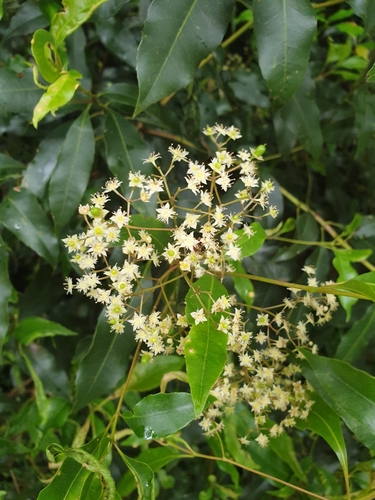
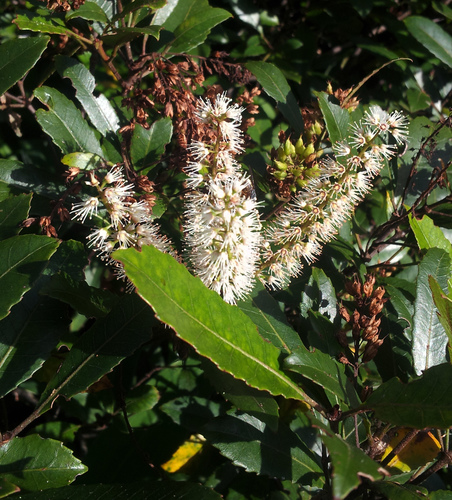
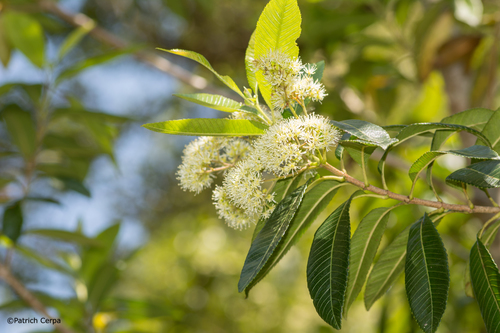
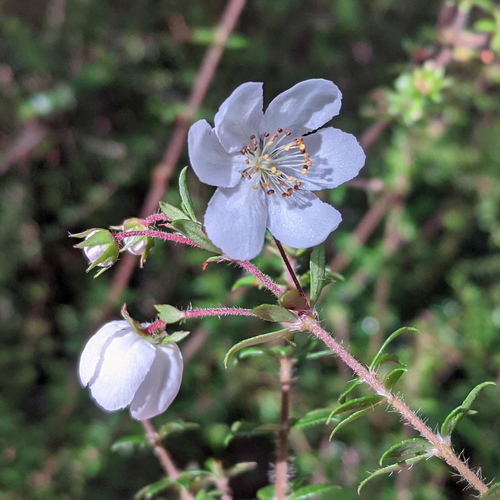
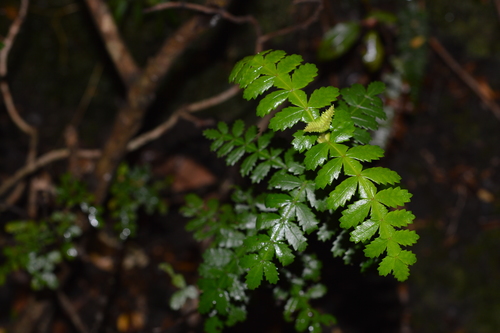
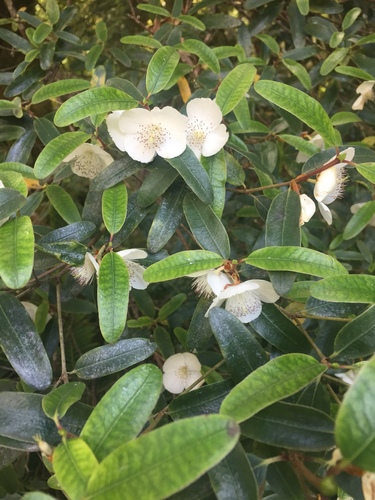
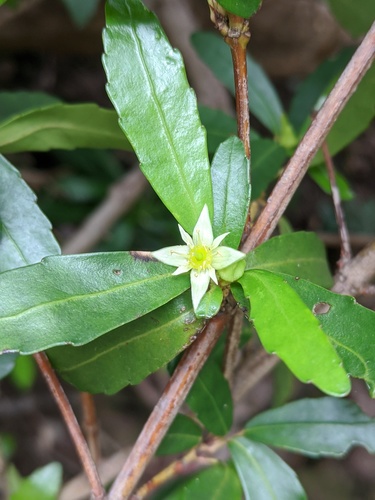
Anodopetalum biglandulosum (A.Cunn. ex Hook.) Hook.fil. has opposite, unifoliolate leaves that are bright green, narrow elliptical to ovate in shape, 5 to 15 millimeters wide, 15 to 60 millimeters long. Leaf tips are blunt, and leaf margins are coarsely serrated. The genus name Anodopetalum comes from Greek roots: an meaning 'not', odous meaning 'tooth', and petalum meaning 'petal', referring to the non-toothed petals of this species. Inflorescences are most often solitary, and occasionally hold two to three flowers. They grow in leaf axils and reach 4 to 8 millimeters in length. Flowers have four ovate sepals that are 4 to 6 millimeters long, and four lanceolate, green-yellow petals that are 2 to 3 millimeters long. Flowering takes place in November and December. The fruit of Anodopetalum biglandulosum is fleshy, green, 13 to 14 millimeters long and 2 to 6 millimeters wide, and contains a single seed. This species is endemic to Tasmania, and is a common component of Tasmanian cool temperate rainforests. Tasmanian rainforests are split into three main types along a fertility gradient: callidendrous, thamnic, and implicate rainforests. Callidendrous rainforests are tall, park-like forests with little understory shrub growth, growing on high fertility soils. Thamnic rainforests have well-formed trees of medium height, with a distinct shrub layer, growing on intermediate fertility soils. Implicate rainforests are low, tangled forests with uneven canopies, growing on infertile soils. Anodopetalum biglandulosum is typically an understory species in thamnic rainforests, and a canopy species in implicate rainforests. This species occurs below 1100 meters altitude in high rainfall areas that receive more than 1750 millimeters of rain per year, on poorly drained acid soils in Western and Southern Tasmania. In these habitats, A. biglandulosum grows as a tangled mass of stems, forming its characteristic 'horizontal' scrub growth.