About Anodontia alba Link, 1807
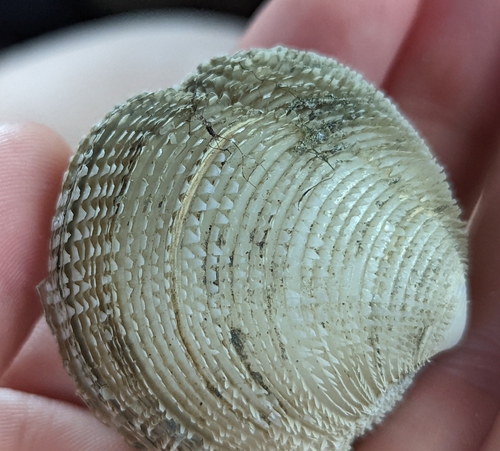
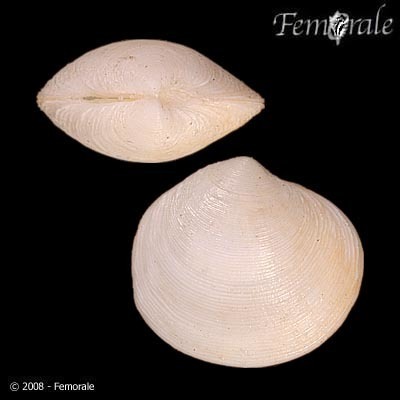
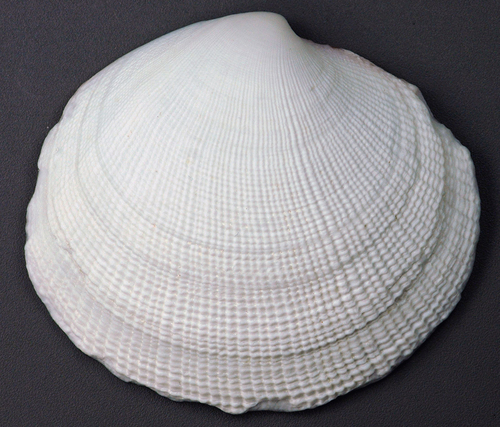
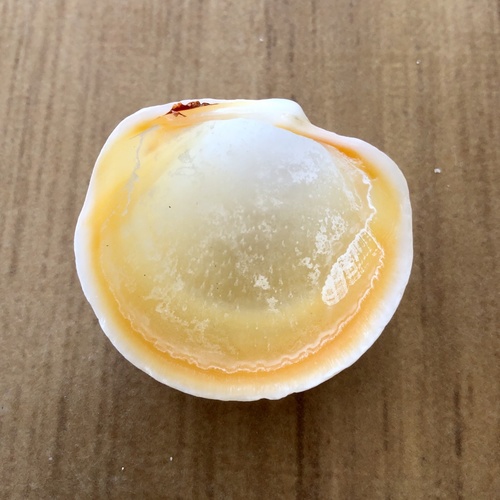
Anodontia alba Link, 1807, commonly called the buttercup lucine, can reach a maximum length of 6 centimetres (2.4 in). It has a pair of equal-sized, nearly circular, inflated valves, joined at a hinge with many teeth. The exterior of the valves is smooth and white, marked with fine concentric lines that run parallel to the margin; these lines mark the species' annual growth stages. The interior of the valves is buttercup yellow. On an empty valve, the pallial line (formed where mantle muscles attach to the valve) is visible running parallel to the margin, with two muscle scars located closer to the hinge. These scars mark the attachment sites of the strong adductor muscles that held the valves closed. The anterior scar, which is closer to the animal's head, lies parallel to the pallial line. This trait distinguishes the buttercup lucine from the similar related species the chalky buttercup (Anodontia philippiana). The buttercup lucine occurs in shallow waters of the western Atlantic Ocean and Caribbean Sea. Its range extends south from Bermuda and North Carolina to the Gulf of Mexico and Costa Rica, and east to Barbados. This species burrows into soft sediment up to a depth of 22 cm (9 in), and is found in lagoons, inlets, and bays just below the low water mark. It can tolerate high salinities, and appears to prefer fine-grained or muddy sand.