About Anodonta cygnea (Linnaeus, 1758)
Scientific name: Anodonta cygnea (Linnaeus, 1756).
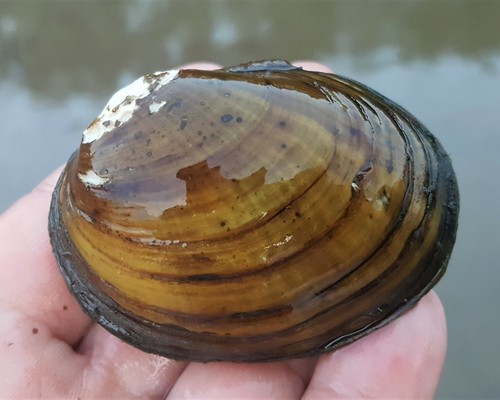
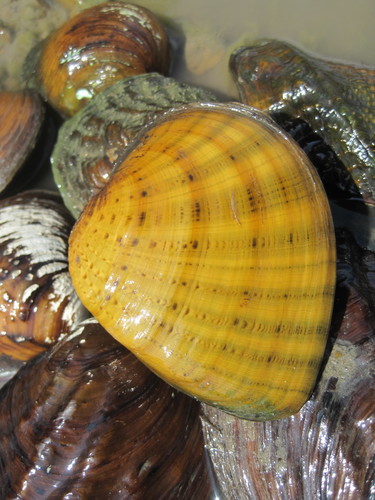
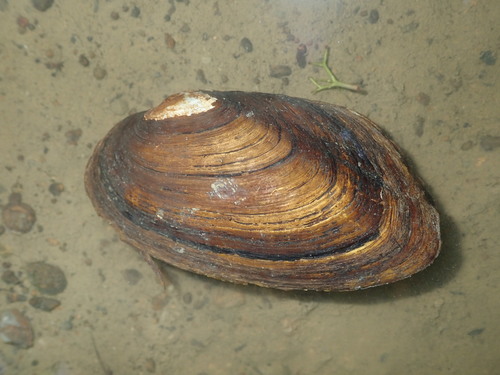
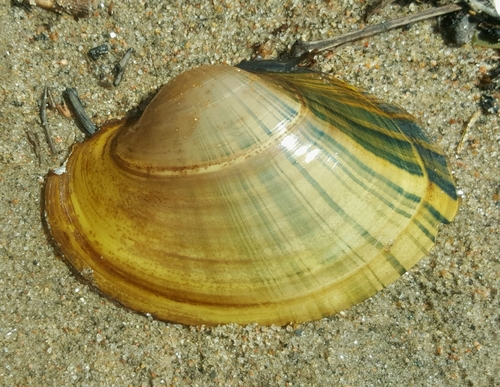
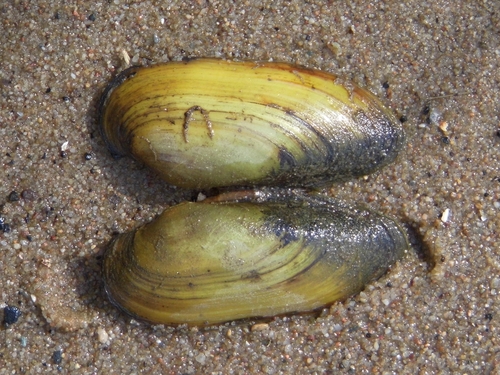
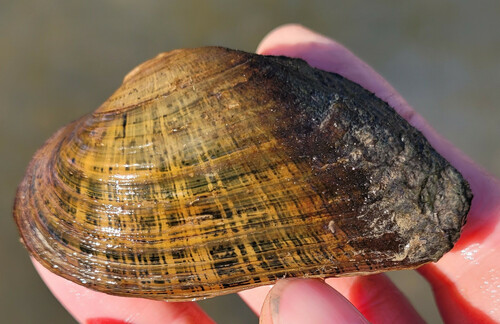
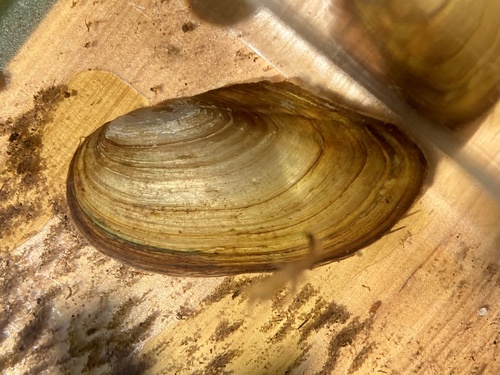
Shell description: This species has a thin but large shell, measuring approximately 10 to 20 cm across. The shell is rather flat, even at the umbo. Shell color is most often pale greenish or brownish. It can be distinguished from the related species Anodonta anatina by its larger overall size, straighter and more parallel dorsal and ventral shell margins. The growth lines on the inner, oldest section of the shell are finer and shallower than those of Anodonta anatina, and these lines reach the shell margin.
Distribution: The native range of Anodonta cygnea is European-Siberian. Its full geographic distribution extends from the British Isles east to Siberia, and south into northern Africa. Conservation statuses for specific regions are as follows: Croatia; Czech Republic: present in both Bohemia and Moravia, listed as vulnerable (VU), and classified as a highly threatened species under Czech implementing decrees No. 395/1992 Sb. and No. 175/2006 Sb.; Germany: highly endangered (stark gefährdet), and listed as a specially protected species in Annex 1 of the Bundesartenschutzverordnung; The Netherlands; Poland: endangered; Slovakia; Sweden: quite rare; Great Britain and Ireland; Italy; Portugal; Denmark; Philippines.
Habitat and human use: Anodonta cygnea occurs in rivers and lakes. Individuals have a strong pungent odor, and are used as bait by carp fishermen.