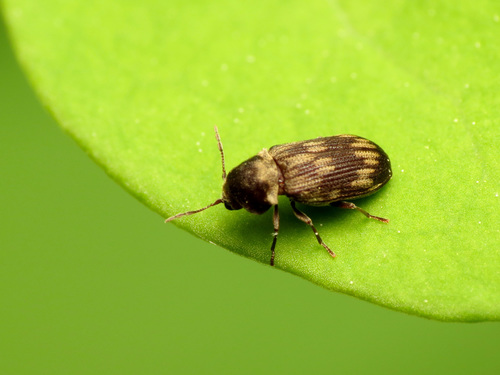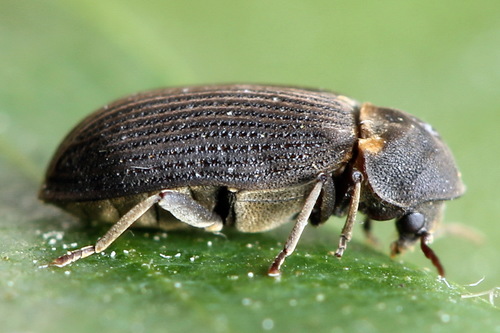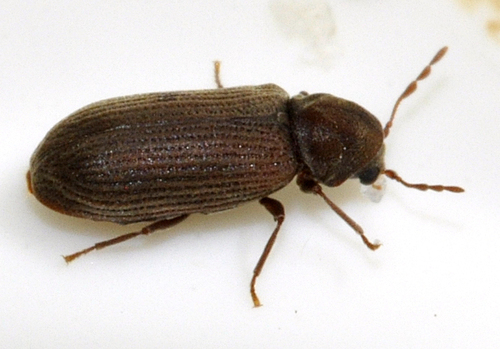
About Anobium punctatum (De Geer, 1774)
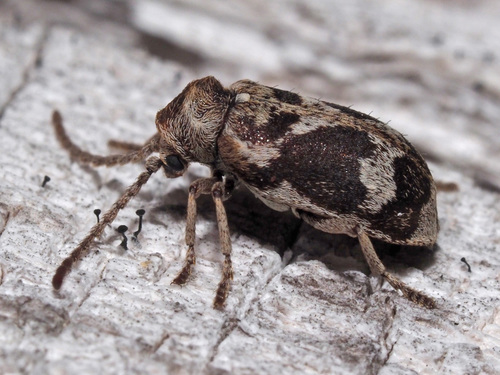
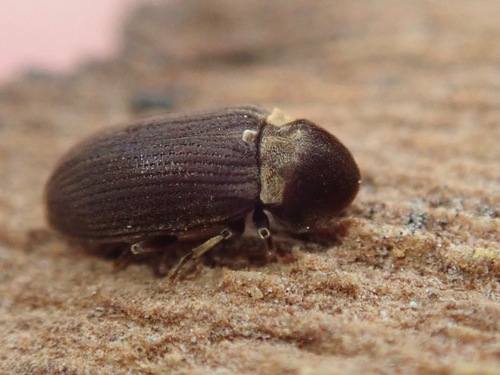
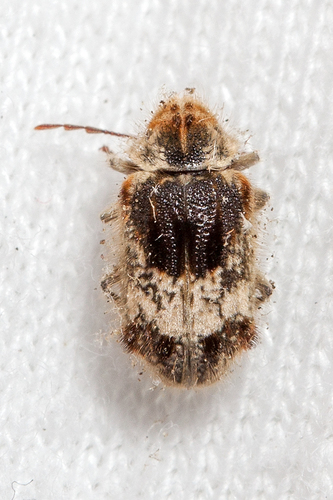
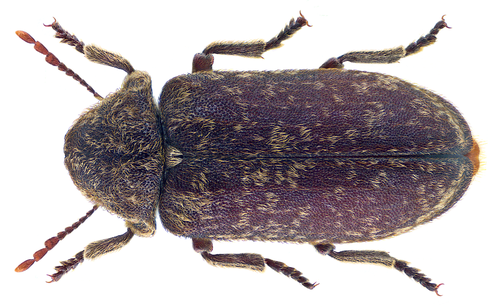
Anobium punctatum, commonly known as the common furniture beetle or common house borer, is a woodboring beetle. It originated in Europe and is now distributed across the world. In its larval stage, it bores into wood and feeds on it. Adult common furniture beetles are 2.7–4.5 millimetres (0.11–0.18 in) long, with brown ellipsoidal bodies and a prothorax that resembles a monk's cowl. This species is often confused with the drugstore beetle and cigarette beetle because of their similar appearance. It can be distinguished from these two species by its lack of antennae and darker prothorax. For its life cycle, females lay eggs in cracks in wood, or inside old exit holes when these are available. Eggs hatch after approximately three weeks, producing a 1 millimetre (0.039 in) long, creamy white, C-shaped larva each. The larvae bore semi-randomly through timber over three to four years, following and eating the starchy portion of the wood grain, and grow up to 7 millimetres (0.28 in). When they are ready to pupate, they move closer to the wood surface. They dig small cavities just under the surface and take up to eight weeks to complete pupation. After pupation, adult beetles break through the wood surface, leaving a 1 mm to 1.5 millimetre (0.059 in) exit hole and spilling dust; this dust and hole are the first visible signs of an infestation. After emerging from the wood, adult common furniture beetles do not feed; they only find mates, reproduce, and die.