About Annona glabra L.
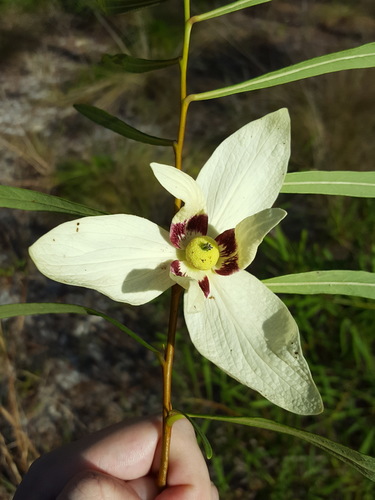
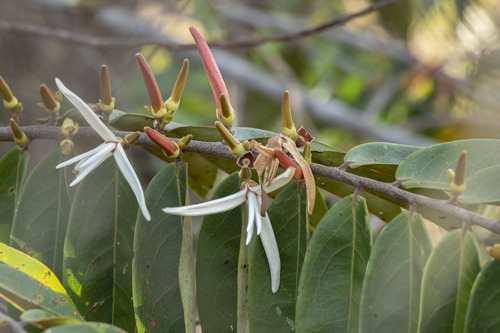
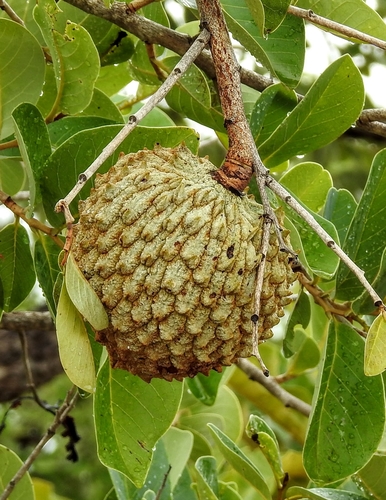
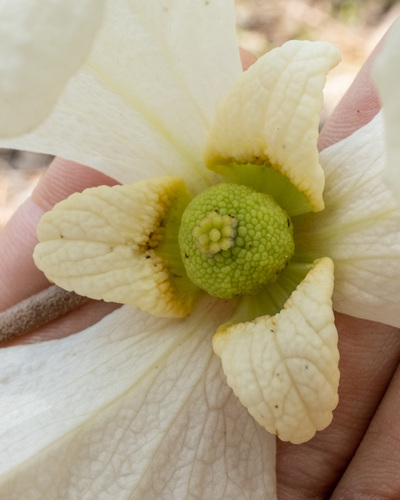
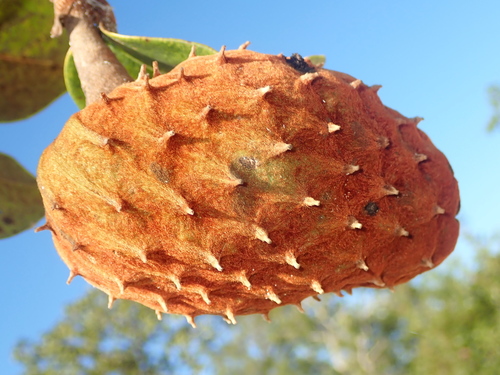
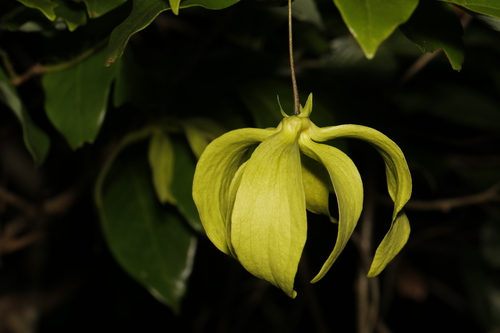
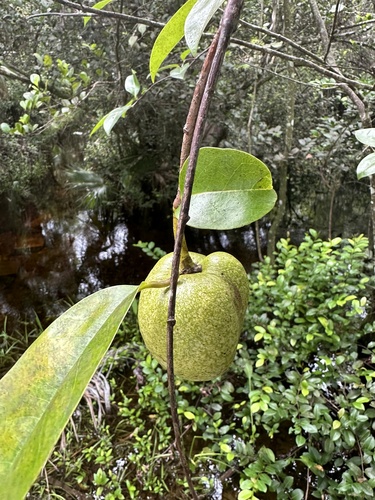
Description Annona glabra L. trees grow up to 12 m tall, with narrow gray trunks, and sometimes grow in clumps. Their leaves are ovate to oblong with an acute tip, 8–15 cm long and 4–6 cm broad, with a prominent midrib. The upper leaf surface ranges from light to dark green. A. glabra leaves have a distinct smell similar to green apples, which distinguishes this species from mangroves. The fruit ranges from oblong to spherical, is apple-sized or larger, 7–15 cm long and up to 9 cm in diameter. It falls when it is green or ripening yellowish. The fruit disperses by floating to new locations, and serves as food for many animal species including wild boar. Reproduction starts when trees are around two years of age. A single fruit holds 100 or more convex, light yellow-brown seeds, about 1 cm long. A. glabra flowers have a short lifespan, and are 2–3 cm in diameter. Flowers have three outer petals and three inner petals. While the petals are pale yellow or cream, the inner base of the A. glabra flower is bright red. Its pollen is shed as permanent tetrads. Ecology A. glabra thrives in wet environments. Its seeds and fruit can be dispersed during wet seasons, when they fall into swamps and rivers, allowing them to spread to coastlines. A 2008 study found that A. glabra seeds can survive floating in salt water and fresh water for up to 12 months, and around 38% of those seeds can then germinate in soil, though A. glabra roots do not tolerate constant flooding well. A 1998 study found that even under intense flooding, the 12-month lifespan of A. glabra seedlings was not affected, but the growth rate of A. glabra trees did decrease over a 6-month period. Compared to other Annona seeds and trees, A. glabra is still more resilient to flooding events. Uses Unlike other Annona species, the pulp of ripe A. glabra fruit ranges from yellow to orange, rather than whitish. The fruit is edible for humans, and its taste is reminiscent of ripe honeydew melon. It can be made into jam, and it is a popular ingredient of fresh fruit drinks in the Maldives. In the past, seeds were crushed, cooked in coconut oil, and applied to hair to get rid of lice. The flesh is sweet-scented and agreeable in flavor, but it has never gained general popular use unlike soursop and other related fruits. Experiments in South Florida have tested using it as a superior rootstock for sugar-apple or soursop. While grafts initially appear effective, a high percentage of them typically fail over time, and soursop on pond-apple rootstock has a dwarfing effect. Recent research suggests that its alcoholic seed extract contains anticancer compounds that could be used pharmaceutically.