About Anisota senatoria J.E.Smith, 1797
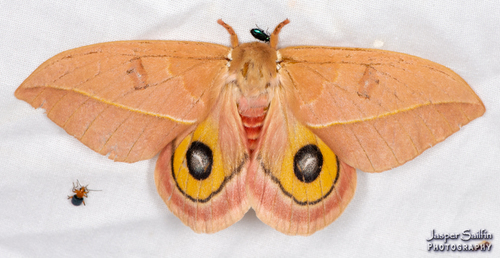
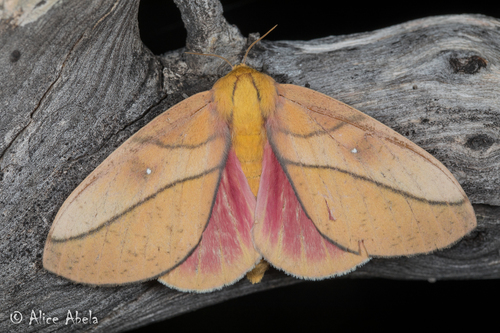
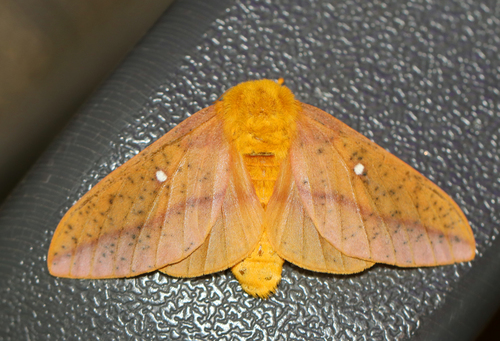
Anisota senatoria, commonly called the orangestriped oakworm or orange-tipped oakworm, is a moth of the Nearctic realm that belongs to the family Saturniidae and subfamily Ceratocampinae. This species is one of the more commonly encountered Saturniids, and occasionally reaches pest status in the northern portions of its range. Because these moths' larvae are late-season feeders, they cause very little lasting damage to their host plants, since most host energy has already been stored by that point of the growing season. Anisota senatoria is very similar in appearance to A. finlaysoni found in southern Ontario, and to A. peigleri found in the southern United States. The species was first formally described by James Edward Smith in 1797. This species occurs in eastern North America, ranging from the edge of the Great Plains to the Atlantic coast, and from southern Ontario south to central Georgia, central Alabama, and eastern Texas. Individuals can be found in northern Florida, though the species is more common in the northern part of its range. Anisota senatoria produces only one brood per year. The recorded food plants for its larvae are oaks (Quercus species), especially red oaks, as noted by Tuskes et al. 1996. Wagner (2005) also records chestnut, birch, hazel, hickory and maple as additional food plants.