About Anisota peigleri Riotte, 1975
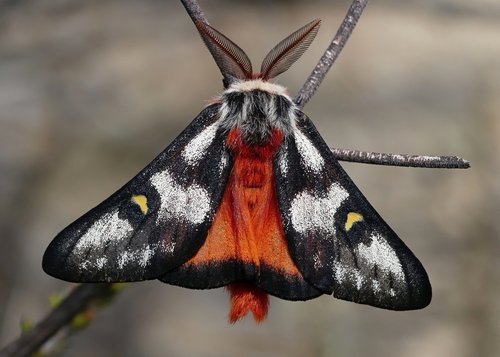
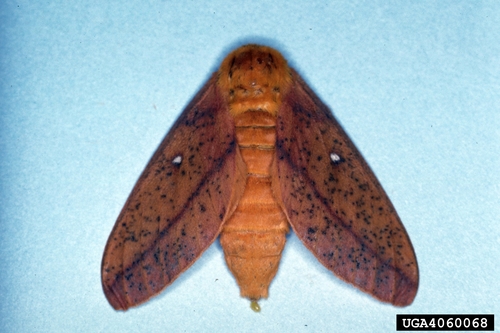
Anisota peigleri, commonly known as the yellowstriped oakworm, is a moth species belonging to the family Saturniidae. It was first described as a distinct species by Jules C. E. Riotte in 1975. This species is distributed in the United States, ranging from southeastern Kentucky, southwestern Virginia, eastern Tennessee, and western North Carolina, southward through western South Carolina, central Georgia, and central Alabama, to north-central Florida. Before being formally described as a separate species in 1975, it was similar to and previously identified as Anisota senatoria (J.E. Smith, 1797). The wingspan of adult Anisota peigleri ranges from 43 to 69 mm. Adults have one generation per year, and are active in flight from mid-July to late August. They fly during the day, and mating occurs between midmorning and midafternoon. The larvae feed primarily on a variety of oak species, including Quercus palustris. They feed in tight groups for their entire developmental period. When fully grown, caterpillars pupate and overwinter in shallow chambers underground. Adult moths of this species do not feed.