About Anisolabis maritima (Bonelli, 1832)
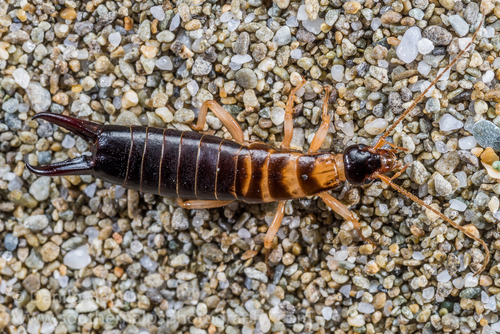
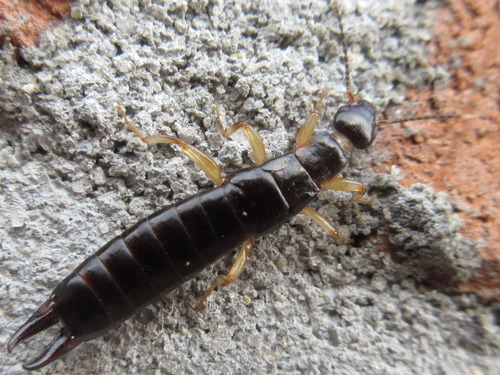
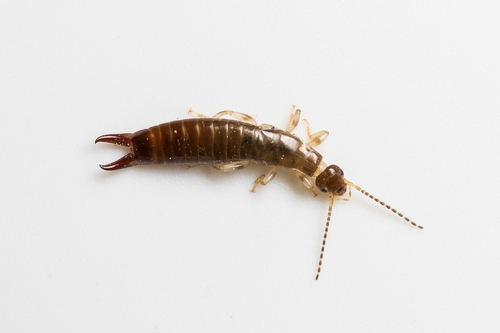
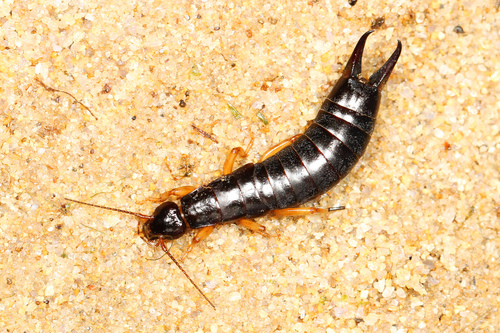
Anisolabis maritima, commonly called the maritime earwig or seaside earwig, is a species of earwig belonging to the family Anisolabididae. Like the seashore earwig, this species lives near shorelines and has a cosmopolitan distribution; it can be found across almost all biogeographic realms. Scientists think this earwig species is originally from Asia. It was later introduced to North America, and has since spread globally through international commerce. Adult maritime earwigs are roughly 2.5 to 3 cm (1.0–1.2 inches) long, and their bodies are grayish or blackish, paired with light yellow legs. Unlike most other earwig species, this species has no wings at all. Male maritime earwigs are distinguished by their characteristically asymmetrical forceps. They use these forceps for mating, capturing prey, and self-defense, and the forceps are strong enough to break human skin. This species preys on a wide range of small invertebrates, including fleas, crickets, ants, small beetles, and sowbugs, and it also shows cannibalistic behavior. Because they live in beach habitats, maritime earwigs are most often found hiding under seaweed and driftwood during the day, and they prefer dark, warm, humid microhabitats. Filial cannibalism, the practice of a mother eating some of her own offspring, has been documented specifically in this species. Scientists believe maritime earwigs engage in this behavior to adjust their clutch size to optimize parental investment. Mothers typically eat their youngest offspring, which shortens the total time they spend caring for the brood. When they optimize the childbearing process this way, the mother has more energy to devote to her remaining offspring, which improves those young’s chance of survival.