About Anisolabis littorea (White, 1846)
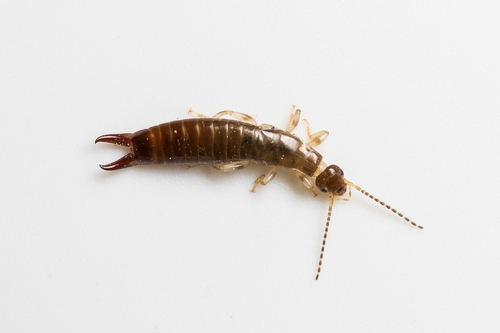
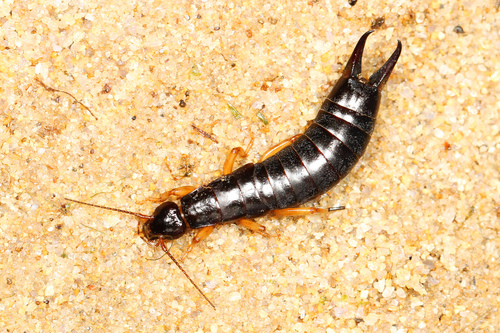
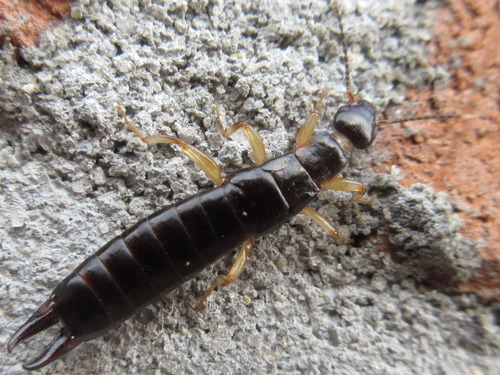
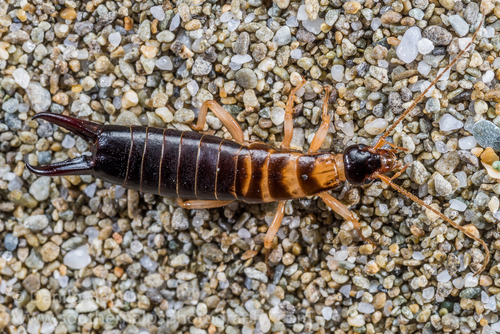
In his original 1846 description of Anisolabis littorea, White recorded the species as: Deep blackish brown body with fulvous legs; the head is somewhat triangular, with rounded sides behind the eyes, and is very deep blackish brown; the labrum, cibarial organs, and antennae are fulvo-testaceous. There are two fulvous spots on the head, one positioned just inside each eye, and a short fulvous line runs along the middle of the hind part of the head. Antennae have at least nineteen joints; the first joint is the longest, the second is very short, the third is three times the length of the second, the fourth is slightly longer than the second, and the remaining joints gradually increase in length. The prothorax is square, fulvous at the front, with a short impressed line running down its middle. The abdomen is widest around the seventh segment, and is deep blackish brown with slightly fulvous margins. The last abdominal segment is large, with several wide longitudinal lines on its upper surface; the forceps are short, slightly hooked at the tip, with two or three curves on the inner edge. Legs are fulvous, and tarsi have no visible pads. The species is apterous (flightless). Overall, this species has a blackish-brown body around 35mm long, with brown-yellow legs. It has two light brown spots on the head, each located close to the inner edge of an eye, and its abdomen reaches its maximum width at the seventh segment. For distribution, the species is reported to be endemic to New Zealand, but other published records note that it also occurs in New South Wales, Queensland, and Tasmania. In terms of habitat and ecology, Anisolabis littorea is similar both ecologically and taxonomically to the maritime earwig. It is commonly found on beaches under stones and debris. It is a carnivore that feeds on millipedes, flies, and isopods such as woodlice. Like most other earwigs, female Anisolabis littorea care for their young during development, and larvae go through five instars before reaching adulthood.