About Anisocapparis speciosa (Griseb.) Cornejo & Iltis
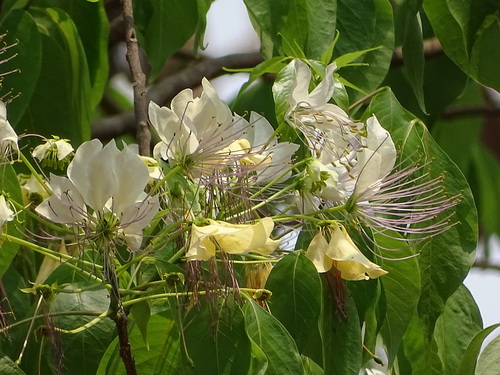
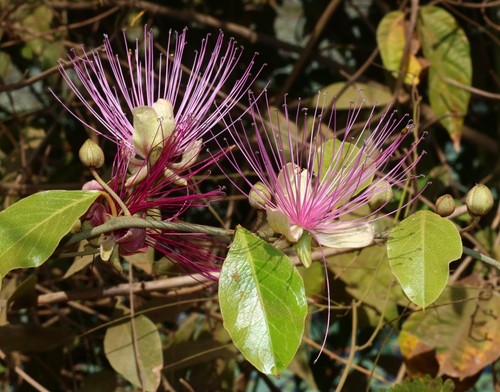
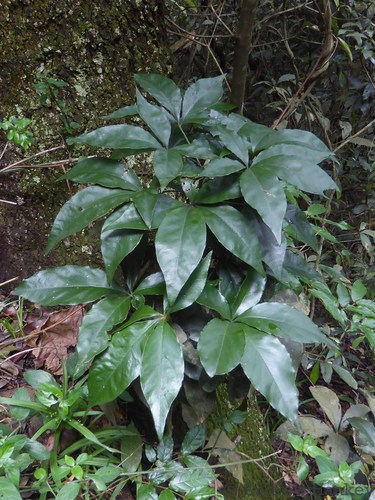
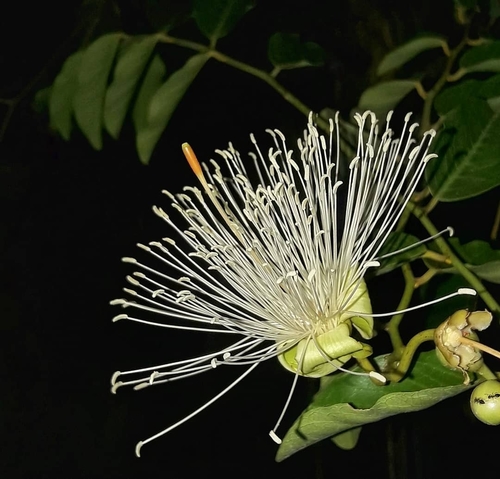
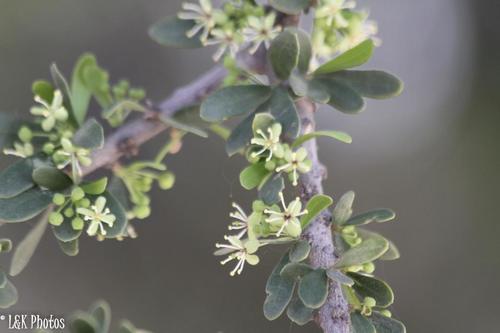
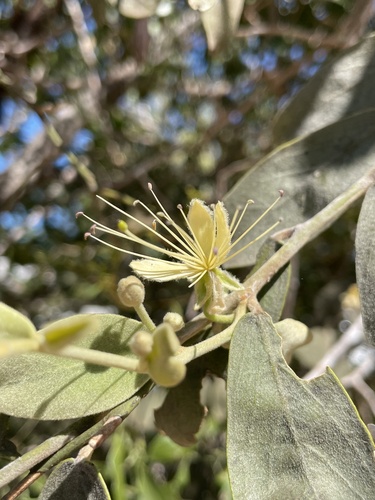
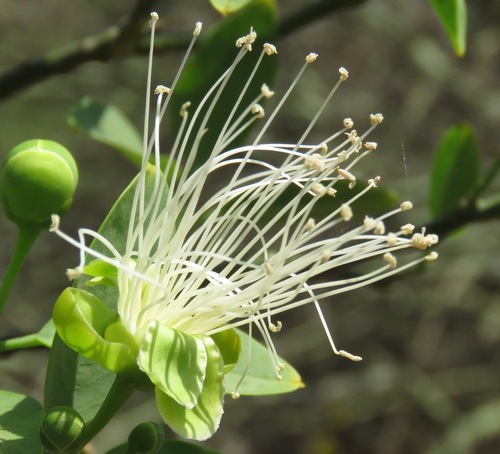
Anisocapparis speciosa (Griseb.) Cornejo & Iltis (synonym Morisonia speciosa) is a tree or shrub that grows 2 to 8 metres (6 ft 7 in – 26 ft 3 in) tall. It has a dense crown and dense foliage, fine tortuous branches, and smooth, thornless dark green bark. Its leaves are simple, alternate, elliptic, and green; they measure 3 to 8 centimetres (1.2–3.1 in) long and 2 to 4 centimetres (0.79–1.57 in) wide. Leaf margins are simple, with a prominent midrib on the leaf underside; leaves are often notched at the tip, with a small mucron or spine. The species produces flowers with anisosepalous calyces that are characteristically decussate-imbricate. Its floral nectaries have four dimorphic scales, and its pollen grains have a fine reticulate surface. Its yellowish flowers are borne singly as inflorescences, and reach 3 to 5 centimetres (1.2–2.0 in) in length. The fruits are green spherical berries with a shiny outer surface. They measure 3 to 5 centimetres (1.2–2.0 in) in diameter and hang from long peduncles. The fruits contain yellow-orange pulp, and four to eight dark, subglobose seeds that are strongly anisocotylary, with one compact major cotyledon and one reduced or suppressed minor cotyledon. This species is native to the Gran Chaco region, and occurs in Bolivia, Paraguay, western Brazil, and northern Argentina. It grows in tropical dry broadleaf forests, and sometimes grows alongside carob trees. The fruit, seeds, and flowers of this species are edible. The fruit's yellowish pulp is very sweet, with a spicy flavor similar to mango. It is a significant source of dietary fiber, vitamin C and magnesium. The seeds and pulp contain natural antioxidants. The Toba and Wichí peoples have traditionally used this plant for culinary and medicinal purposes. Fruits ripen when they fall from the tree. Fruits can be preserved by sun-drying, and underripe fruits may be cooked. Seeds are prepared by boiling, sun-drying, then crushing to make flour or a puree, which is often combined with oil or fat. The flowers have a bitter taste that can be removed by boiling. Traditional medicinal uses include treatment for toothaches, use as an antidysenteric, and treatment for "cold stomach". Ground bark of the plant is used in folk veterinary medicine for wound healing and to treat skin myiasis. The fruit has been used as fishing bait, and the leaves have been used to dye chaguar fibers. Fruits of this plant are also eaten by gray brockets.