About Anigozanthos flavidus Redouté
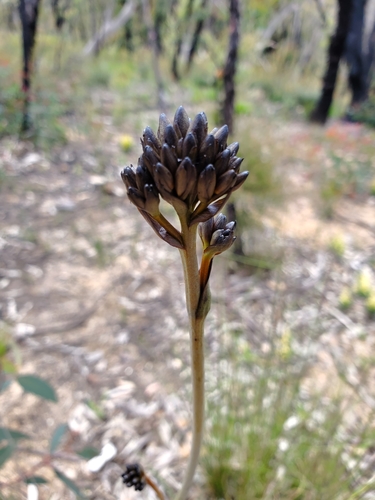
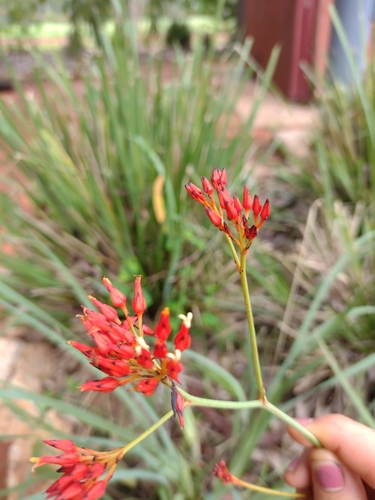
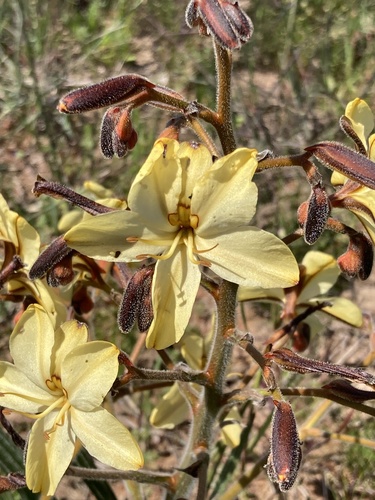
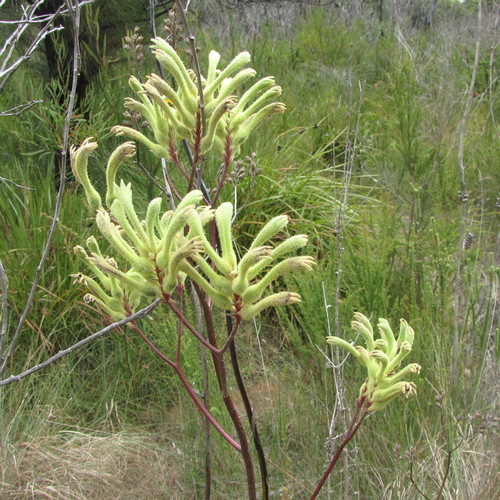
Anigozanthos flavidus Redouté is a plant species native to Southwest Australia. It is a member of the Haemodoraceae family, and is commonly known as tall kangaroo paw, yellow kangaroo paw, or evergreen kangaroo paw. The specific epithet flavidus refers to the species' yellow flowers. It belongs to the genus Anigozanthos, which includes all kangaroo paws and cat's paws. This species forms an evergreen clump of strap-like leaves that grow up to 1 metre long and 0.02 metres wide. Leaves grow from an underground rhizome that is around 0.05 metres in diameter. The rhizome enables the species to regenerate after drought or fire. Each individual plant can produce over 350 flowers, borne on up to 10 long stems. Flowers appear during the region's summer. Pollen is distributed by birds when the birds plunge into flowers to reach nectaries. Flowers are most often yellow and green, but can also appear in shades of red, pink, orange, or brown. This species is found in unshaded winter-wet habitats including roadsides, creeksides, forests, and swamps. Its natural range extends from Two Peoples Bay in the southeast, through the Warren and southern Jarrah Forest, to Waroona on the Swan Coastal Plain. It was previously endemic to this region, but is now naturalised in New South Wales. This kangaroo paw is currently widely cultivated in Australia's eastern states and in the United States of America. Anigozanthos flavidus hybridizes with other members of its genus, and is used to develop new cultivars. It is a hardy plant that tolerates a wide range of soil types and conditions, and can live for around 30 years in a garden setting. It can be propagated from seed or from sections of rhizome. This species was first described by Augustin Pyramus de Candolle in 1807. The description was published in Redouté's Les Liliacees, accompanied by an illustration by Redouté.