About Anguispira alternata (Say, 1817)
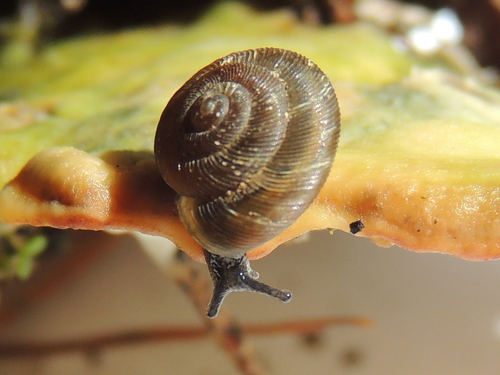
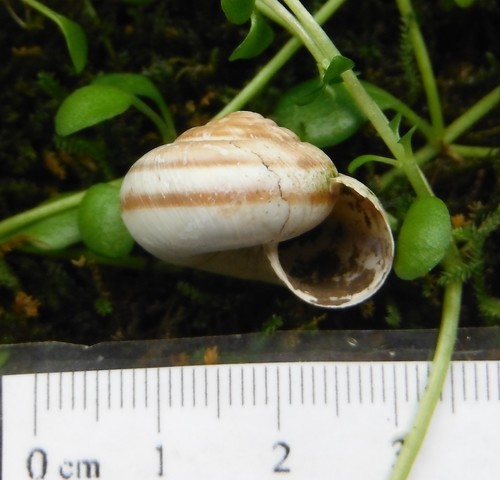
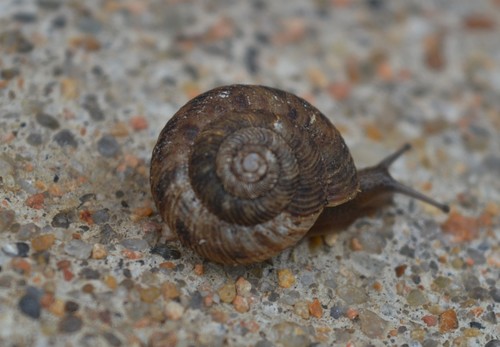
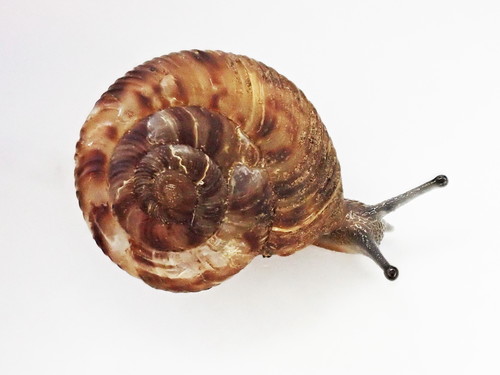
Anguispira alternata, commonly called the flamed disc or flamed tigersnail, is a species of pulmonate land snail belonging to the Discidae family, also known as the disk snails. It is the most common and most widely distributed member of the genus Anguispira, and is one of the more common land snail species native to North America. The flamed tigersnail is hermaphroditic, but it is not viviparous. Eggs laid by this species are typically 2 to 3 mm (0.08 to 0.12 in) in diameter, ovate in shape, white in color, and covered with a gelatinous coating that is thought to provide protection. Eggs may be laid either singly or in clusters, and usually take 30 to 45 days to hatch. Hatching duration can change depending on moisture, temperature, and other environmental factors. Unlike some other snail species, the flamed tigersnail does not produce a love dart. The flamed tigersnail occurs in both urban and rural areas across the United States and Canada. The northern and eastern limit of its range reaches New Brunswick, Canada; from there, the range extends south to Florida and west to Kansas. While most populations across the species' range are considered secure, it is classified as critically imperiled in Louisiana and Alabama, imperiled in North Carolina, and vulnerable in Indiana and Pennsylvania. It is considered extirpated from Mississippi. The flamed tigersnail is quite adaptable and can be found across a wide variety of habitats. It is most often found in forests or glades near streams, where individuals climb on trees or limestone outcrops, or burrow in leaf litter. However, it can also be found along roadsides, in vacant lots, and in other urban areas. One study estimated that the average home range of a flamed tigersnail is 40 square meters (430.56 square feet). Flamed tigersnails typically live in groups, and they commonly burrow and hibernate together during the winter. In Kansas, groups of these snails were observed to range from 16 to 75 individuals per foot. Scientists have recorded this species climbing trees at night, likely to feed on algae that grows on bark. It is not currently known whether the species prefers any specific tree species, though one population was documented climbing American beech trees most frequently. In general, flamed tigersnails are herbivores that feed on decaying plant matter, fungi, and algae.