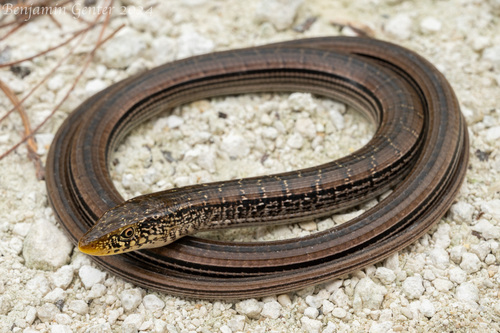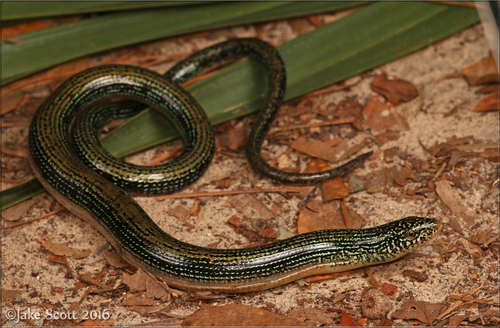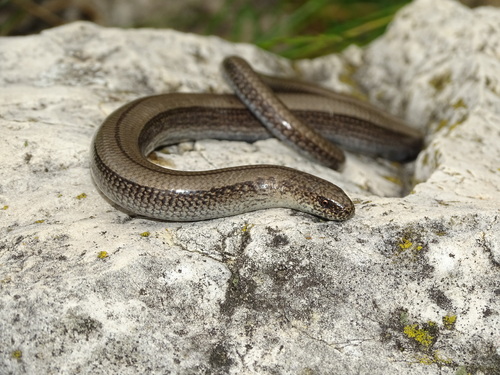
About Anguis veronensis Pollini, 1818
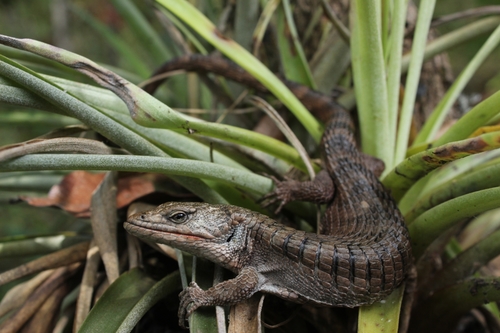
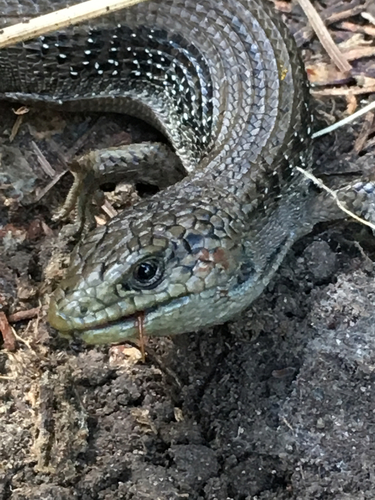
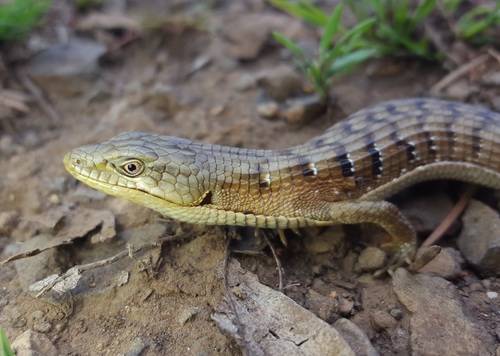
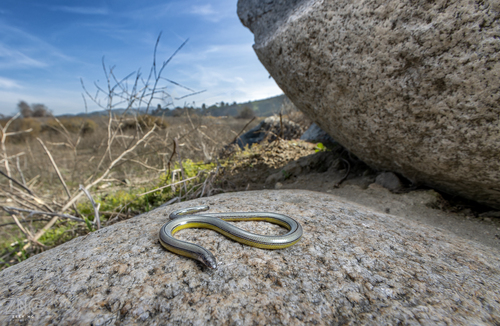
Taxonomy and description: In the past, slow worms from the Italian Peninsula were not distinguished from other European slow worms, and were generally considered to be the same species as Anguis fragilis. A relatively long independent evolutionary history, along with distinct morphological and genetic traits, led to this species being resurrected in 2013 under the synonymous scientific name Anguis cinerea. Following the priority naming rules of the International Code of Zoological Nomenclature, the slow worm was renamed to the oldest available name for this taxon: Anguis veronensis. Because species in the genus Anguis are very morphologically similar and hard to tell apart visually, distinguishing this Italian slow worm from other deeply genetically divergent Anguis species requires genetic analysis. Morphological comparison analyses found that A. veronensis differs from A. fragilis in three key traits: relative tail length, with A. veronensis having a longer tail in both sexes; number of subcaudal scales, with A. veronensis having more subcaudal scales in both sexes; and head morphology, with A. veronensis having a relatively more robust head. Log-linear analysis found negligible differences in colouration between the two species, and there was also insufficient variation in the presence of the external ear opening. Distribution and ecology: Currently, this anguid species has only been observed in Italy and parts of France. Some experts hypothesize that the farthest extent of the species' distribution also includes southern Switzerland. The species' main range is on the Italian Peninsula, where it populates the entire peninsula except for its southeastern parts. The Italian slow worm is more common in northern Italy, while populations in the southern parts of the country are smaller. In northern and northeastern Italy, as well as in Slovenia where only hybrids have been found, the Italian slow worm sometimes comes into contact with the common slow worm, leading to occasional hybridization. Anguis veronensis inhabits only far southeastern mainland France, in the region of Provence-Alpes-Côte d'Azur. The species' presence has also been confirmed on the Mediterranean island Ile Sainte-Marguerite, where the animals are genetically related to mainland slow worms from Provence-Alpes-Côte d'Azur. Common habitats of northern populations include various forest-steppe, steppe and ruderal areas, with some individuals even living in urban areas. Slow worms in central and southern regions of Italy usually occupy a less diverse range of habitats; the most common are edges of oak and beech forests, followed by sand dunes in Mediterranean maquis shrubland. This species can be found at altitudes ranging from sea level to over 2,000 meters in the Alps. Most individuals are primarily diurnal (active during the day) and occasionally crepuscular (active at twilight), while Mediterranean populations are mostly crepuscular and sometimes nocturnal (active at night).