About Anguilla anguilla (Linnaeus, 1758)
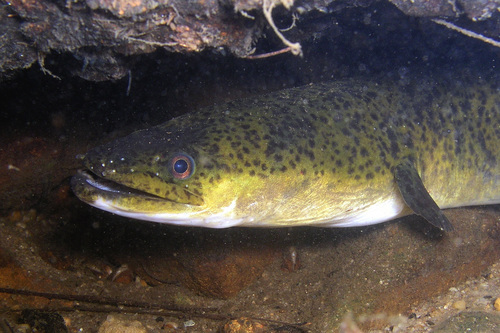
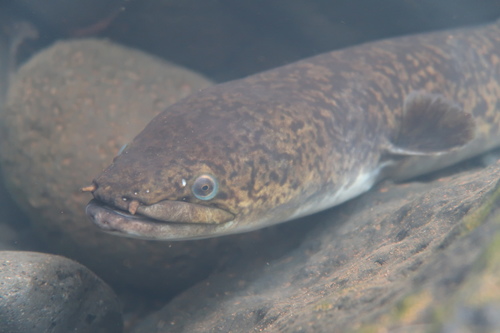
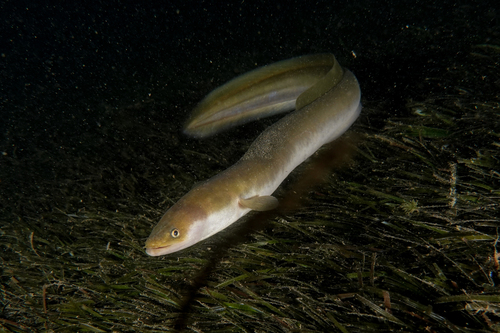
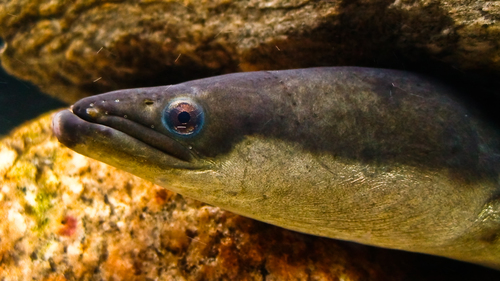
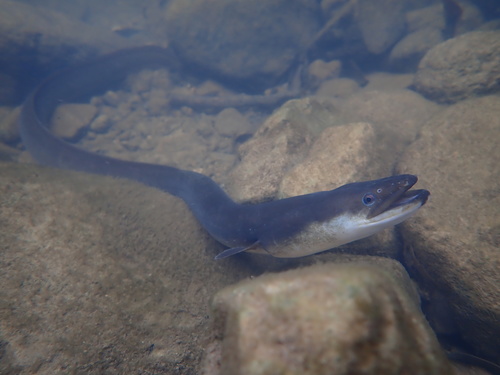
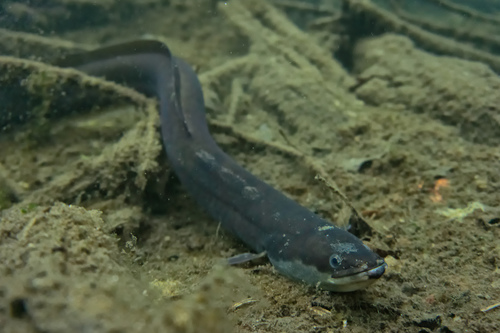
The European eel, scientific name Anguilla anguilla (Linnaeus, 1758), goes through five distinct development stages over its lifecycle: leptocephalus (larva), glass eel, elver, yellow eel, and silver eel. Adults in the yellow growth phase typically reach 45–65 centimetres (18–26 inches) in length. They rarely grow longer than 1.0 metre (3 ft 3 in), but exceptional individuals can reach a maximum length of 1.33 metres (4 ft 4 in). European eels have between 110 and 120 vertebrae. Wild individuals usually live around 15–20 years, while some captive specimens have survived for over 80 years. A well-documented captive individual called "the Brantevik Eel" lived for 155 years in the well of a family home in Brantevik, a fishing village located in southern Sweden.
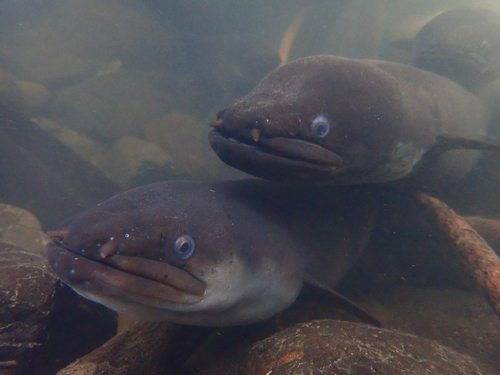
In terms of ecology, European eels occupy depths ranging from 0 to 700 metres (0–2,297 ft) underwater. After spawning in the Sargasso Sea, young eels disperse northward across the Atlantic Ocean, its coastlines, and all rivers that flow into the Atlantic. They feed primarily at night, locating food using their sense of smell. Their diet includes worms, fish (which they bite into chunks to eat even when individual prey are too large to swallow whole), mollusks like slugs, and crustaceans like crayfish; they will occasionally eat plankton when it is available in large enough quantities. European eels are hunted as prey by larger eels, herons, cormorants, and pike, while seagulls specifically target young elver eels. To find shelter, eels typically compete for hiding spots among aquatic plants, inside tube-shaped cracks in rocks, or in muddy fields when they are in inland habitats.