About Angelica sylvestris L.
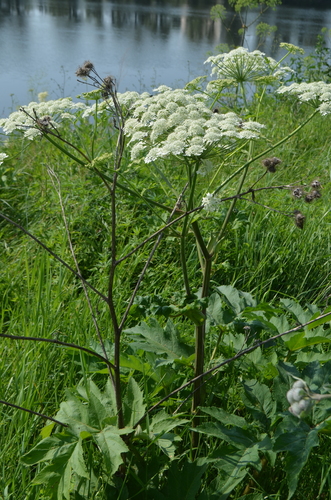
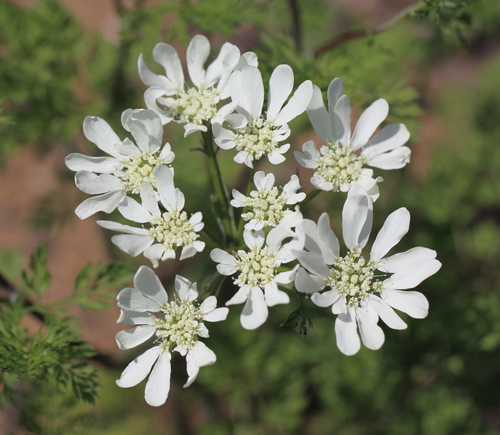
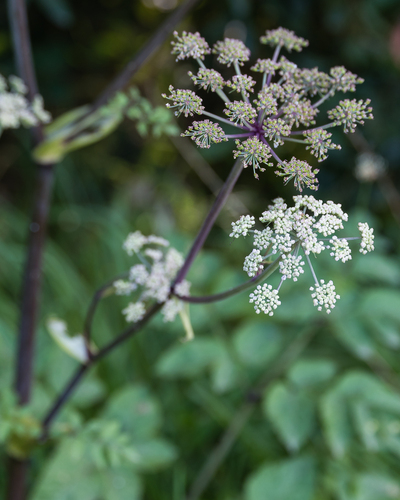
Angelica sylvestris L., commonly called wild angelica, is a species of flowering plant native to Europe and central Asia. It can be an annual or a short-lived perennial, growing to a maximum height of 2.5 metres (8.2 feet). It has erect purplish stems, and produces rounded umbels of tiny white or pale pink flowers in late summer. The Latin specific epithet sylvestris translates to "growing in woodland", but this plant tolerates a wide range of growing conditions, including fields, hedgerows, open woods, marshes, and fens. It will grow in light sandy soil, medium loamy soil, and heavy clay soil. It has recently been identified as an invasive weed in New Brunswick and Cape Breton, Nova Scotia, Canada. The New Brunswick Invasive Species Council states that unless this species is controlled, it could spread across Canada and overwhelm native vegetation. A very wide variety of insects visit the flowers of this plant, giving it a generalised pollination system. Adult wasps of the species Dolichovespula norwegica are documented feeding on the nectar produced by A. sylvestris. A. sylvestris is cultivated for garden growth. The pink-flowered cultivar 'Ebony' has received the Royal Horticultural Society's Award of Garden Merit. This plant was eaten as a vegetable until the 20th century, and can be stored for later use. Its stems were eaten fresh, while its leaves could be boiled into a stew for storage, or cooked with milk. It has also been used as a source of dye.