About Angelica capitellata (A.Gray) Spalik, Reduron & S.R.Downie
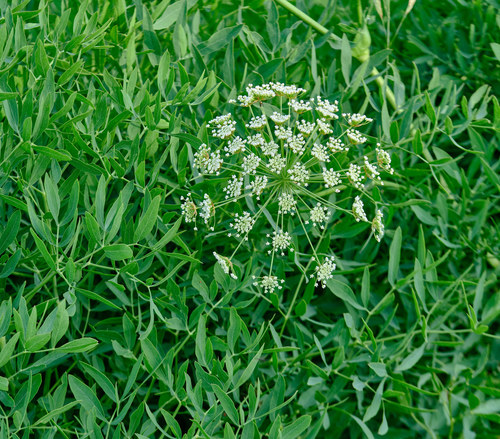
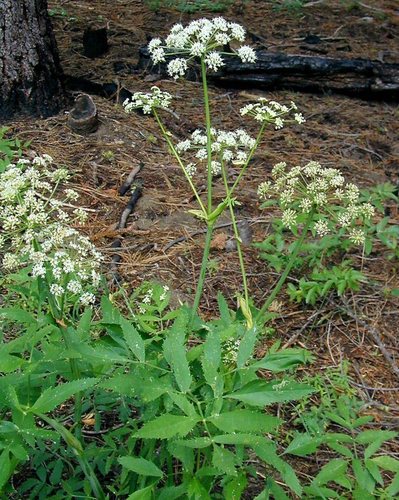
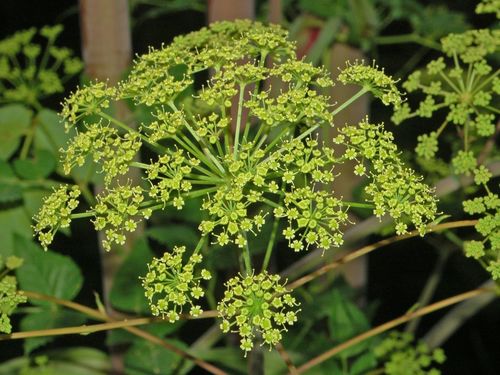
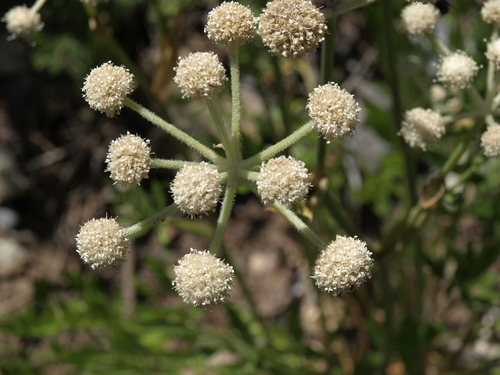
Angelica capitellata (A.Gray) Spalik, Reduron & S.R.Downie is a stout perennial herb that grows from a tuberous root and produces an erect stem that often exceeds 1 meter (3+1⁄2 feet) tall, sometimes reaching 2.1 m (7 ft) in total height. Its stems and leaves are usually green, but may sometimes be nearly white in color. The lower parts of the plant are smooth, while the inflorescence is covered in rough hairs. Its leaves measure 10–40 centimeters (4–15+1⁄2 inches) long, and are divided into several segments that hold widely spaced leaflets. These leaflets may themselves be intricately divided into small segments. The inflorescence is a whitish compound umbel around 10 cm (4 in) across, with many branches. This species blooms from July to August. Its nearly spherical, headlike terminal umbellets hold many tiny white or purple-tinged flowers; the protruding stamens of these flowers give them a very fuzzy appearance when in full bloom. This plant is native to western North America, ranging from eastern Oregon and central Idaho through Nevada and southern California, extending into Baja California. It grows in moist habitat types, including creeksides and meadows. Ranger's buttons (the common name for this plant) is quite similar to other large Umbelliferae that occupy the same habitats: Sierra angelica and cow parsnip. However, these three species have very differently shaped leaves, and Sierra angelica and cow parsnip have umbellets with quite distinct flowers that differ from the tight, round umbellets of ranger's buttons. This species is included in Toxic Plants of North America (2001).