About Anemonia viridis (Forsskål, 1775)
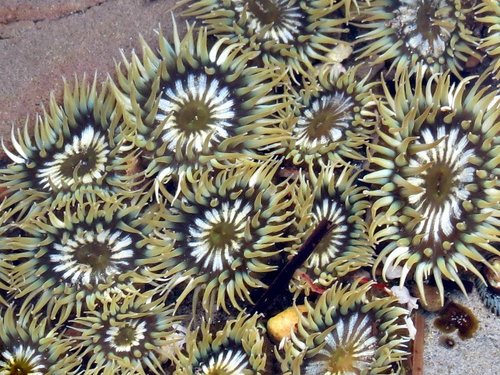
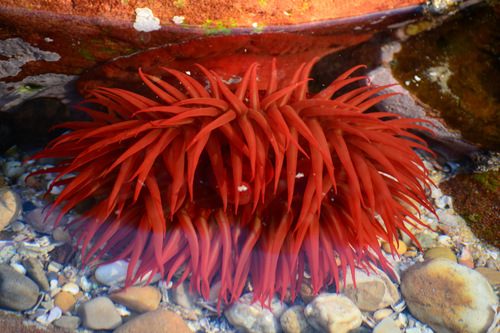
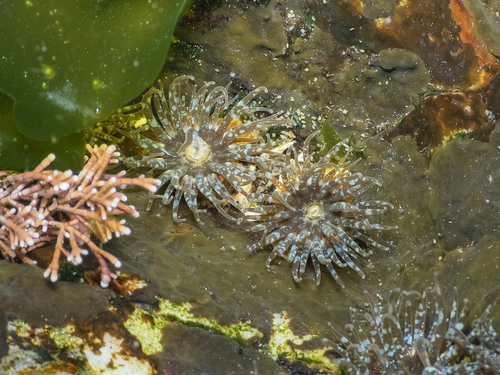
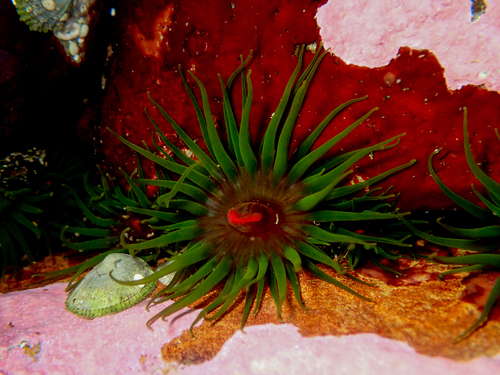
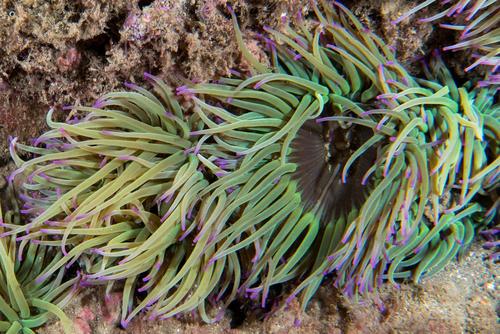
The snakelocks anemone, scientifically named Anemonia viridis (Forsskål, 1775), is a species of sea anemone found in the eastern Atlantic Ocean and the Mediterranean Sea. Populations of this anemone native to the Mediterranean are sometimes classified as a separate species, the Mediterranean snakelocks anemone (A. sulcata). This anemone’s tentacles are typically a deep green with purple tips. While the green color is often incorrectly associated with its symbiotic algae, it actually comes from green fluorescent protein, a compound also found in corals and other cnidarians. The tissue of the snakelocks anemone does host symbiotic algae called zooxanthellae, which the anemone needs for long-term survival. If the population of these algae decreases, the anemone may turn a dull grey color. Since the algae require light to grow, snakelocks anemones live in the sunniest pools. On average, this species grows to 8 cm wide. Unlike many cnidarians, anemones and all other anthozoans completely lack a free-swimming medusa life stage. Instead, the polyp itself produces eggs and sperm; after fertilization, the egg develops into a planula, which grows directly into a new polyp. Multiple small animal species regularly live in symbiotic or commensal relationships with the snakelocks anemone. These animals gain protection from predators by staying among the anemone’s venomous tentacles. Examples include the incognito (also called anemone) goby (Gobius incognitus), the shrimp Periclimenes aegylios, and Leach's spider crab (Inachus phalangium). Snakelocks anemones are widely consumed for food in southwestern Spain’s Gulf of Cádiz region, where they are called ortiguillas de mar (meaning “little sea nettles”, a reference to their urticant properties before cooking), or simply ortiguillas. The whole animal is marinated in vinegar, coated in a tempura-style batter, and deep-fried in olive oil. Ortiguillas are served as a delicacy in some coastal Andalusian restaurants. They look and feel similar to croquettes, but have a strong seafood flavor. This anemone is also eaten in Sardinia, where it is deep-fried in olive oil and known as triads. It is growing in popularity as an aquarium pet, especially in Europe, and adapts easily to aquarium environments.