About Anemone blanda Schott & Kotschy
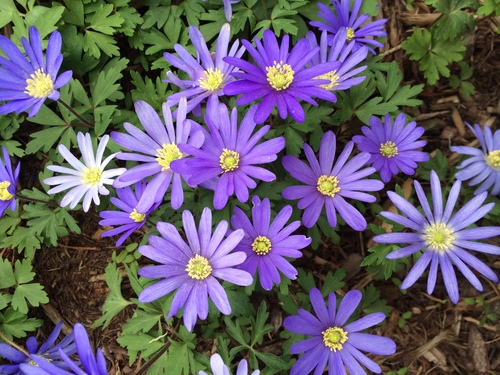
Anemone blanda Schott & Kotschy (also referred to as Anemonoides blanda) is an herbaceous tuberous perennial that grows 10–15 cm (4–6 in) tall. It is prized for its daisy-like flowers that bloom in early spring, when few other plants are in flower, growing over fernlike foliage. This species easily naturalizes, and its flowers typically come in an intense purple-blue shade, though pink and white variations are also available. The native range of this species extends from southeastern Europe, through Turkey and Lebanon, to western Syria in the Middle East. It has been introduced to Germany and other regions, and numerous naturalized populations exist in Canada and the United States. Bees and other insects feed on its nectar and pollen. Anemone blanda is considered poisonous if ingested in large quantities, and causes pain and irritation in the mouth. Contact with any of its poisonous parts—bark, flowers, fruits, leaves, roots, stems, and seeds—can cause contact dermatitis. Additional poisoning symptoms include inflammation, blistering from contact with fresh sap, vomiting, and diarrhea. For cultivation, Anemonoides blanda should be planted in autumn in partially shady areas with moist soil. It can also grow in full sun if the soil remains moist. It grows well in any well-drained soil that dries out in summer, so it is often used for underplanting deciduous trees that create these required conditions. It rapidly colonizes any location it favors. This plant is deciduous: its flowers and leaves die back in early summer. Its flowers attract bees, butterflies, and other pollinators. This species and its cultivar 'White Splendour' have earned the Royal Horticultural Society's Award of Garden Merit. In the Middle Ages, herbalists used Anemone blanda to treat gout and headaches. Due to its toxicity, it is no longer used medicinally. Boiling the plant's purple petals produces a light green dye, which was historically used for dyeing.