About Anemone apennina L.
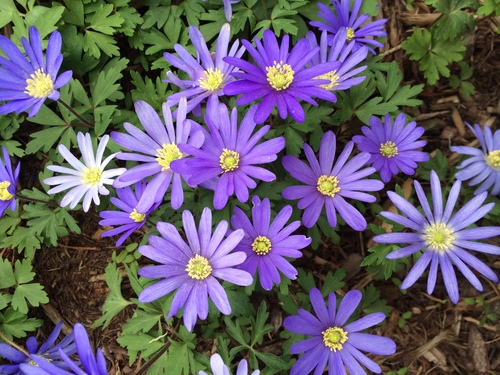
Anemonoides apennina, with the synonym Anemone apennina L., is commonly called the Apennine anemone or blue anemone. It is a rhizomatous perennial flowering plant belonging to the family Ranunculaceae. This species takes its name from the Apennine Mountains, and is native to southern central Europe. It has become widely naturalised in other parts of Europe, including the United Kingdom. It resembles and can be easily confused with Anemonoides nemorosa. This plant grows to a height of 20 cm. In early spring, it produces single blue flowers above ferny foliage that dies down in the summer. The flowers measure approximately 3.5 cm across, and bear 10 to 15 narrow petals. Its leaves are palmate, made up of dark green, 3-lobed, toothed leaflets. The undersides of the leaves are hairy; this feature can be used to distinguish Anemonoides apennina from the similar species Anemone blanda. This species is especially valued for its ability to colonise deciduous woodlands. It can also be found growing in open scrub, under park trees, and near former human habitation. It has received the Royal Horticultural Society's Award of Garden Merit. Consuming this plant may cause mild stomach upset, and skin contact with it may cause irritation.