About Androsace alpina (L.) Lam.
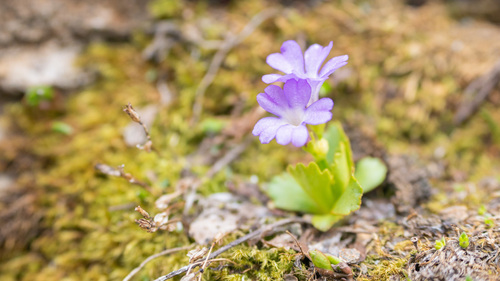
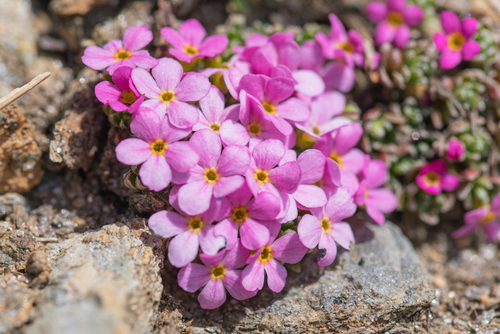
Androsace alpina (L.) Lam. produces flowers that can be white or pink, often with both colors occurring on the same individual plant. During its short flowering season, the flowers can grow so densely packed that they completely shade the plant’s underlying foliage. This species grows as dense, cushion-like mats that can grow up to 20 centimeters across. Each mat is made up of many small, overlapping leaves arranged in tight rosettes. Individual leaves are lanceolate, around 5–10 millimeters long, and covered in fine glandular hairs. These hairs help the plant limit water loss and discourage herbivores from feeding on it. In mid summer, each cushion grows one or more short flowering stems, each holding a single, five-petalled flower that measures approximately 8–12 millimeters across. The flowers only open under direct sunlight, and close when conditions are overcast or at dusk. This behavior protects the flower’s reproductive organs from cold temperatures and excess moisture. This species is endemic to the high-alpine zones of the European Alps, and grows only at elevations between 2,500 and 3,200 meters. It prefers shallow soils that sit in rock crevices or on loose scree, which are loose fragments of limestone or dolomite. These locations provide excellent drainage that prevents root waterlogging during snowmelt. The species’ characteristic cushion growth form creates a more stable microclimate by trapping heat and reducing exposure to wind, which are critical adaptations for this harsh environment, where even summer nights can drop below freezing. Field surveys show that Androsace alpina has a strong preference for south- to south-east-facing slopes on initial lithosols. In these sites, shallow soils in rock fissures and gravelly slopes provide maximum solar exposure and minimize how long frost persists on the landscape. Because Androsace alpina depends on this highly specialized habitat and has a very limited native range, it is vulnerable to harm from climate warming and disturbance caused by recreational activities in alpine areas.