About Andricus quercuscalifornicus (Bassett, 1881)
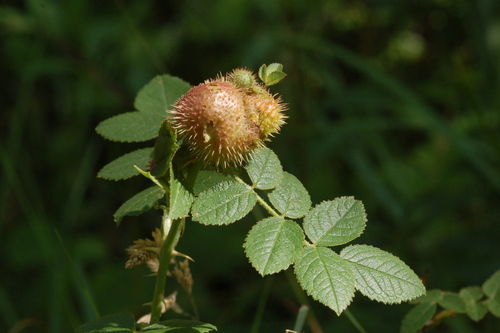
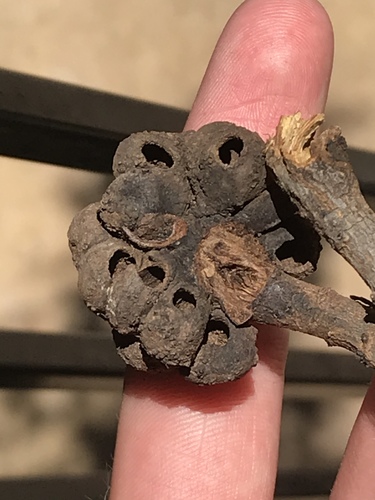
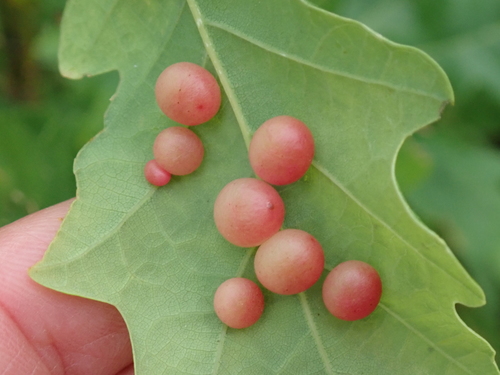
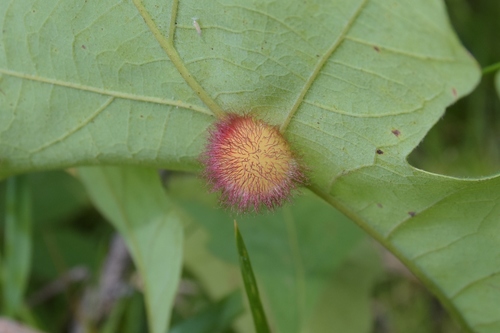
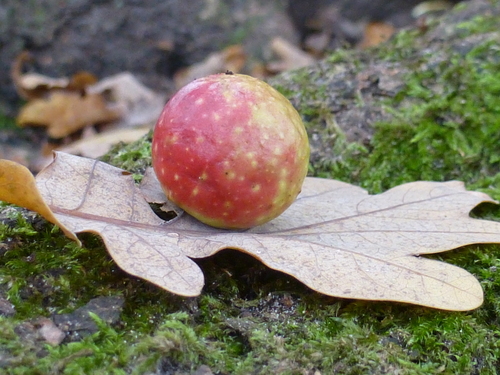
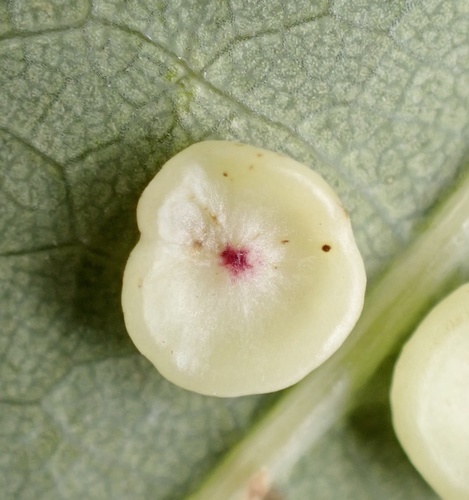
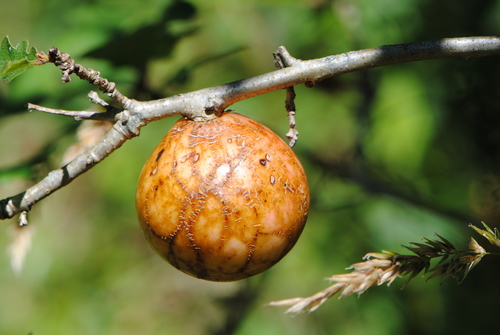
Adult Andricus quercuscalifornicus wasps are small, stout, brown insects roughly 5 mm long, with clear wings that are nearly twice the length of their body. Their antennae are filiform, and about the same length as their legs. Despite their small size, this is one of the largest species of cynipid wasps. The galls induced by this wasp are typical oak apple galls, with a roughly spherical shape. Galls range in color from greenish to reddish or orange, with color variation depending on the host plant, gall age, and environmental conditions. They measure 2 to 14 cm across, and often hold multiple wasp larvae, along with parasites and other mutualistic species that feed on the gall tissue. The outer layer of the gall has a hard texture that is not easy to penetrate. Andricus quercuscalifornicus can induce and live in galls on a wide range of oak species, but it is primarily found in galls formed on Valley Oak. Because of this association with Valley Oak, the wasp is most commonly found in habitats including riparian forests, open foothill woodlands, valley savannas, plant groves, and suburban areas. The wasps usually induce galls on Valley Oak twigs, and the distribution of these galls across a single tree can be affected by many factors, including shoot vigor and the genotype of the host tree. Andricus quercuscalifornicus is thought to reproduce exclusively through parthenogenesis, and no male specimens of this species have ever been collected. Phylogenetic studies note that several other species in the genus Andricus have hidden, or cryptic, sexual generations. Adult females lay eggs into the cambium layer of oak twigs in the fall, using their ovipositor. More vigorous host twigs tend to develop more galls. Eggs remain on the twig over winter, then hatch in spring, typically in early April. The newly hatched larvae immediately induce gall formation, and the galls can appear to grow larger almost overnight. While the gall is still small and soft, most parasitoids enter it, as their ovipositors can still reach the larvae at this stage. The gall stops growing after several weeks to two months, then begins to dry out and turns tan or brown. The larvae pupate, then chew their way out of the gall in late summer or early fall, before flying off to lay eggs on other trees. A small number of larvae spend an additional winter inside the gall and do not emerge until the following fall; the cause of this delayed emergence is not currently known. This wasp species plays an important role in its ecosystem. More than 20 known species of parasitoids, inquilines, and hyperparasites are associated with its life cycle. The persistent galls also provide shelter for various fungi and many other insect species. Several bird species are also known to feed on the galls and the organisms that live inside them.