About Andricus inflator Hartig, 1840
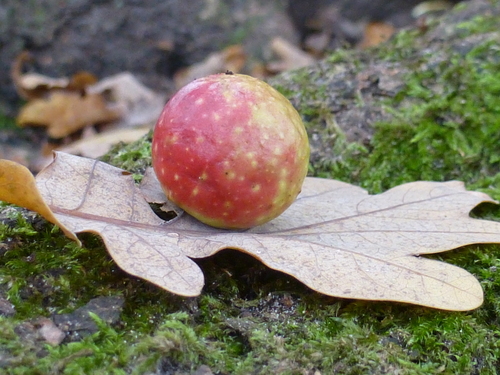
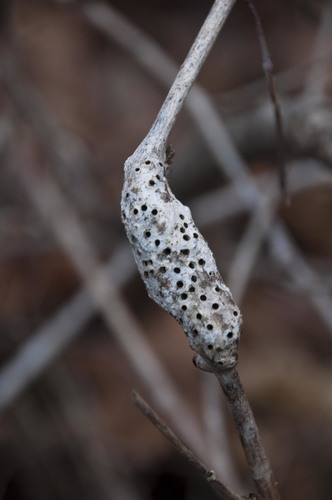
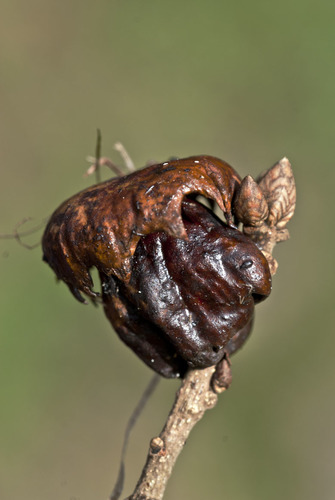
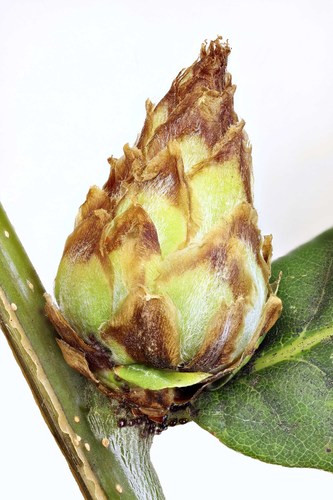
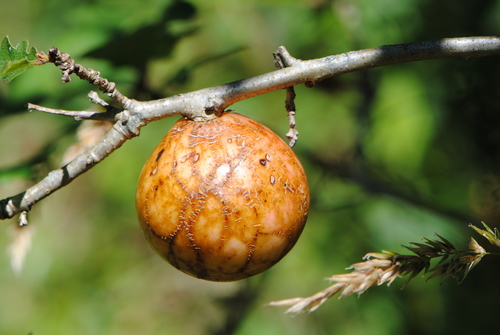
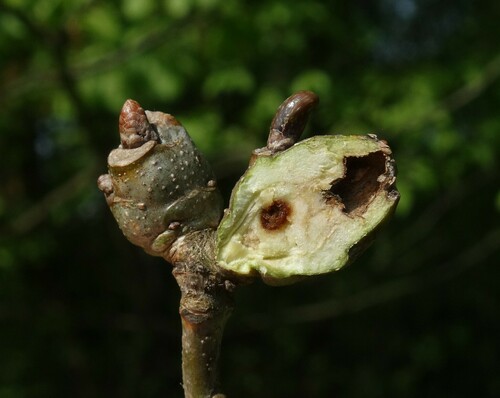
Andricus inflator is an oak gall wasp species with a two-generation yearly life cycle, one sexual generation and one asexual generation, each producing distinct galls on oak trees. In spring, the sexual generation develops in galls that form as swollen twig tips, up to 15 mm across. These galls are green when young, and eventually turn the same colour as the host twig. Their internal cavity is long and narrow, with an egg-shaped inner gall at the bottom that holds the wasp larva. Old galls can persist on the tree, and new shoots may grow out of them. Adult wasps emerge from these galls in summer. After mating, females from the sexual generation lay their eggs in buds, most often buds that grow directly from the tree trunk. The asexual generation that develops from these eggs forms small, egg-shaped green galls up to 6 mm across, surrounded by bud scales. Each of these galls can hold either one larva, according to Chinery, or multiple larvae, according to Plant Parasites of Europe. Asexual galls are present from September to November; as they mature, they turn brown, and fall to the ground in late autumn. Larvae pupate inside the fallen gall, and new adult wasps emerge in spring to lay eggs in young twigs. Some larvae may stay inside the gall for two or three winters before emerging. Females of this species lay eggs on multiple oak species: Quercus frainetto (Hungarian oak), Quercus lusitanica (Lusitanian oak), Quercus petraea (sessile oak), Quercus pubescens (downy oak), Quercus robur (pedunculate oak), and Quercus rubra (northern red oak). This species can be distinguished from similar related gall wasps by its gall characteristics. The twig tip swelling caused by Andricus curvator has a spherical or oval internal cavity, unlike the long, narrow internal cavity of A. inflator's sexual gall. Andricus quercusramuli produces an egg-shaped gall that is smaller than A. inflator's asexual gall, reaching a maximum length of 3.5 mm, and also matures in autumn. The asexual gall of Andricus infectorius becomes a 10–20 mm swelling when it matures in October, and falls from the host tree during winter; its colour changes from green to dark brown as it matures. Andricus inflator is distributed across Europe, ranging from Ireland to Ukraine.