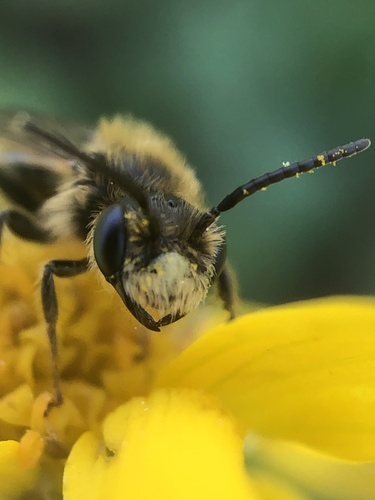
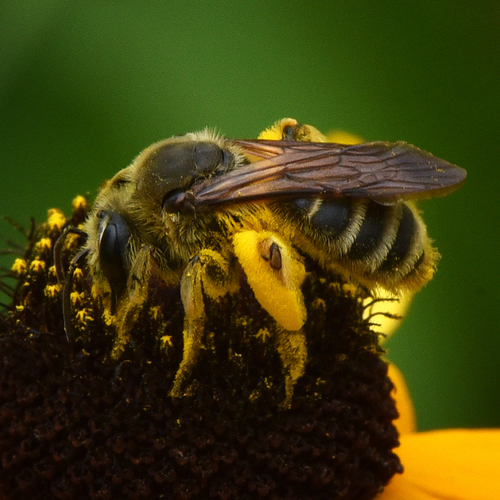
About Andrena carantonica Pérez, 1902
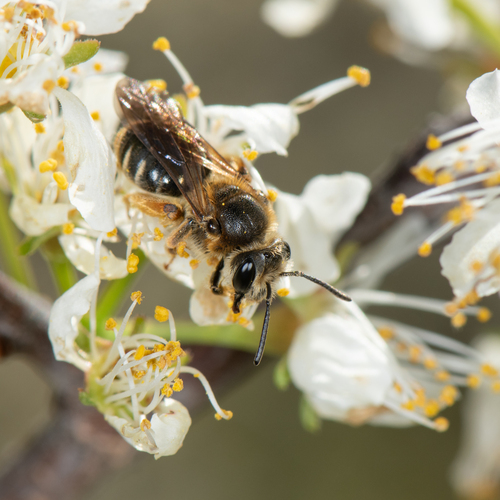
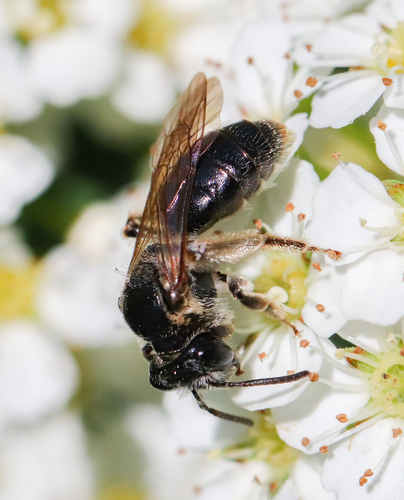
Andrena trimmerana is a bivoltine bee species, and its two broods differ in morphology, especially in males. It is difficult to distinguish from its close relative A. scotica, which is partially sympatric with it. Females of A. trimmerana can be separated from A. scotica females by red color patches on the sides of tergite 1 and the reddish color of the basal sternites. This reddish basal sternite color is also seen in A. bimaculata, but A. trimmerana is larger, and has a rougher texture on the top of its propodeum. The later summer generation of A. rosae also resembles A. trimmerana, but A. rosae has shorter hairs covering its entire body. Adult A. trimmerana measure 13 to 15mm in length. Males from the early spring generation of A. trimmerana have a variably sized spine on their genae. This genal spine is also present in spring generation males of A. rosae, but A. rosae males have entirely dark abdomens and lack an apical tooth on their mandibles. Males of A. ferox also have a genal spine, but can be identified by their yellow hind tibiae. Andrena trimmerana occurs in the southern portion of the western Palearctic. Its range extends from southern Great Britain south through Mediterranean islands to North Africa, and east through France and Central Europe to Turkey and western Russia. Andrena trimmerana is a generalist species that lives across a wide variety of habitats. These include coastal landslips and cliffs, inland heaths, open woodland, chalk grassland, fens, pastures, gardens, brownfield sites, and occasionally urban greenspace.