About Andinoacara pulcher (Gill, 1858)
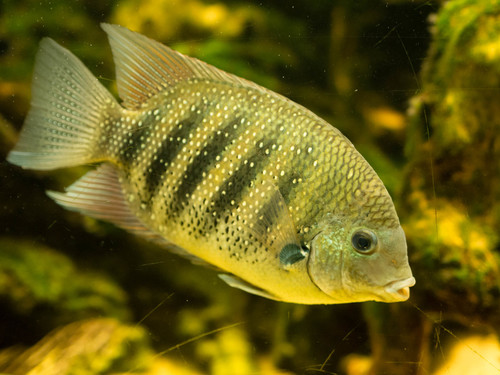
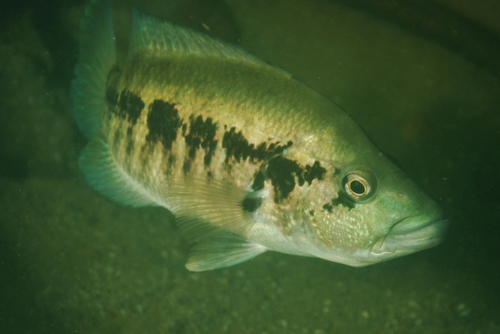
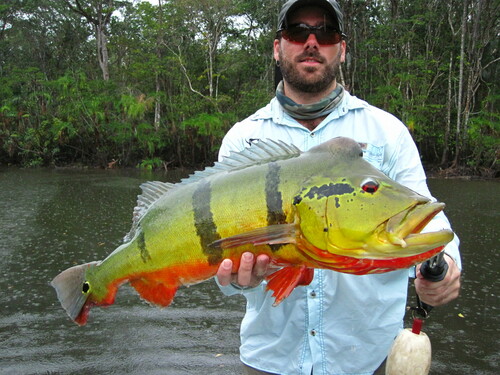
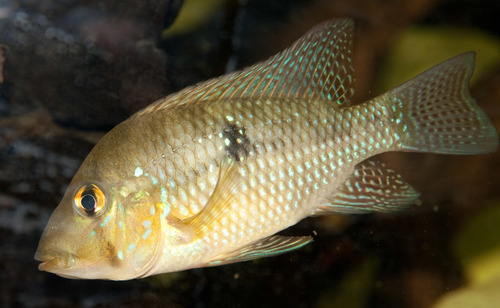
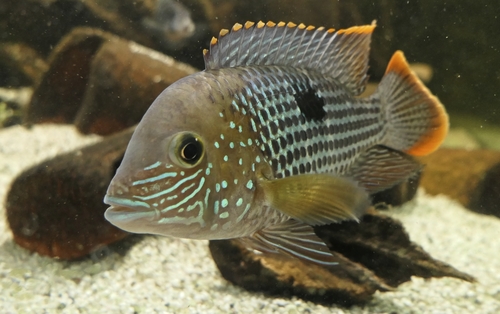
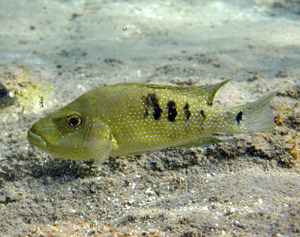
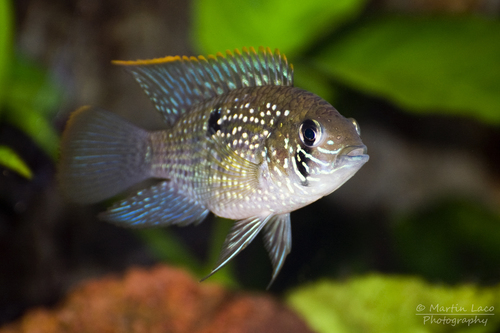
Andinoacara pulcher exhibits sexual dimorphism through differences in size and coloration. Males of this species are larger and have brighter coloration than females, especially during the reproductive season. This species can be distinguished from other similar genera such as Geophagus by several key traits: it has three anal spines, eight distinct body bands, and lacks a lobule on the first branchial arch, a feature unique to the Geophagus genus. Blue Acara, the common name for this species, is native to Trinidad and Venezuela, where it inhabits tropical environments. Fully grown adults reach a maximum length of around 16 centimeters, and juveniles have a generally similar appearance to adults. This species occurs in streams and turbid tropical waters across Trinidad and Venezuela. It is typically found in waters with a pH between 6.5 and 8.0, and water temperatures between 18 and 23 degrees Celsius.