About Anaxyrus woodhousii (Girard, 1854)
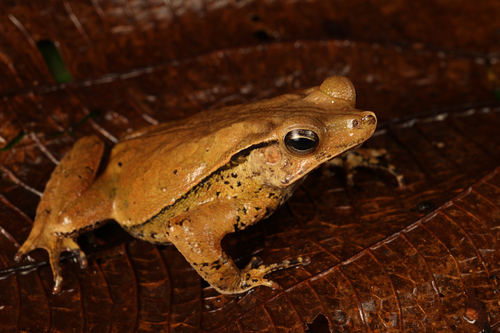
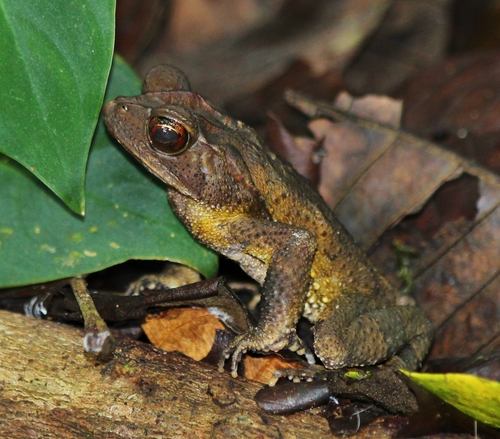
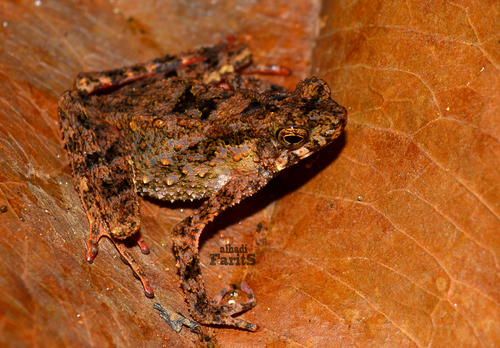
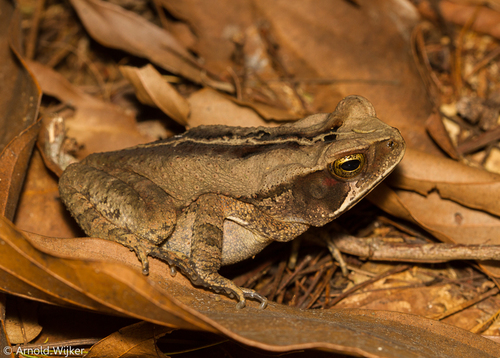
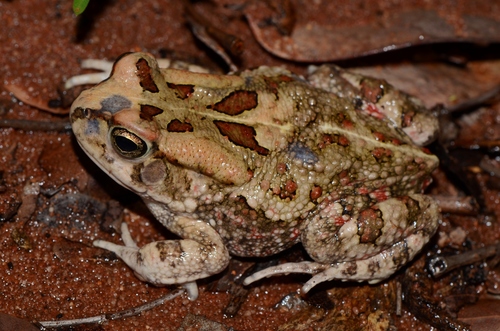
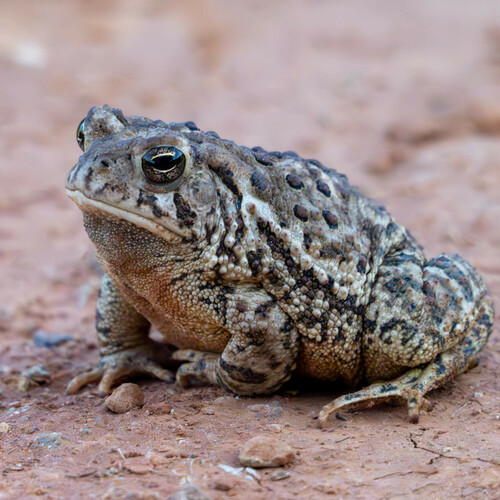
Woodhouse's toad (Anaxyrus woodhousii) is a robust amphibian that reaches a maximum snout-vent length of 127 mm (5 inches). Its head bears prominent cranial crests located in front of and between the eyes, and it has long, large parotoid glands. The dorsal (upper) surface is grayish-brown or yellowish-brown, speckled with small dark spots, with a narrow pale line running along the spine. The belly is paler than the back and is typically unspotted. Males have a single vocal sac on the throat, and their call resembles a sheep's bleat, lasting between one and three seconds. This toad occurs in North America at altitudes up to 2,500 metres (8,200 ft), with a range stretching from Mexico in the south to Washington in the north. In the United States, it can be found in Arizona, Arkansas, California, Colorado, Idaho, Kansas, Montana, Nebraska, Nevada, New Mexico, North Dakota, Oklahoma, Oregon, South Dakota, Texas, Utah, Washington, and Wyoming. Across the western part of its range, it typically inhabits lowland riparian corridors and wooded areas alongside streams and rivers. At higher altitudes, it lives in wet meadows, ponds, reservoirs, and lakes. It can also be found in urban environments, canals, ponds, and irrigated agricultural land.