About Anaxyrus punctatus (Baird & Girard, 1852)
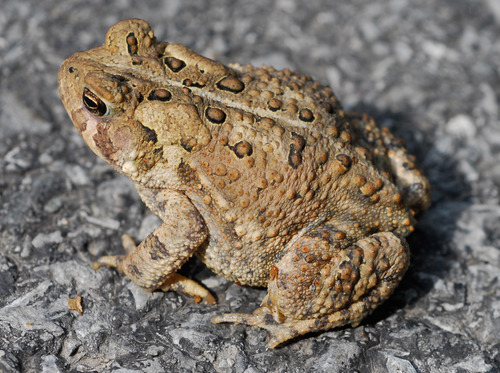
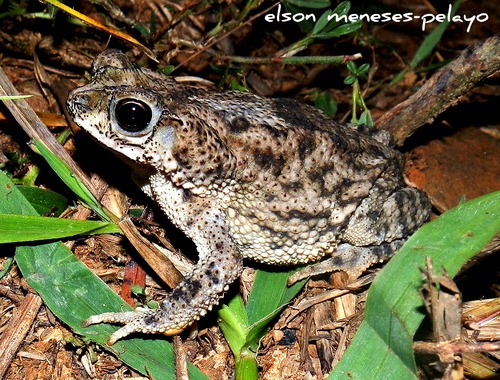
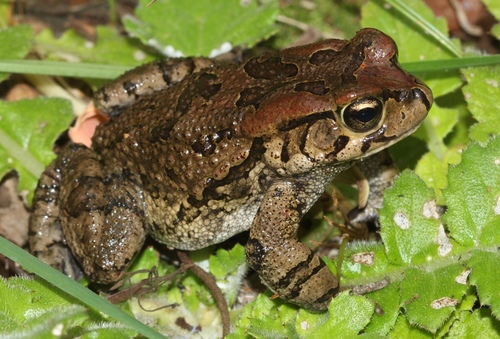
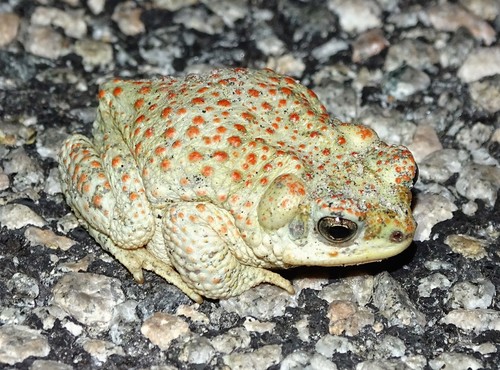
Anaxyrus punctatus, commonly called the red-spotted toad, is a small toad species that reaches an adult length of 3.7 to 7.5 cm (1.5 to 3.0 in). It has a flattened head and body, with a dorsal surface that ranges in color from light grey and olive to reddish-brown, marked with reddish or orange skin glands. Its belly is whitish or buff, and may or may not have faint dark spots; it also has round parotoid glands and a pointed snout. Juvenile red-spotted toads resemble adults, but have more prominent dark ventral spotting and yellow undersides to their feet. During the breeding season, male red-spotted toads have a dusky throat and develop nuptial pads. This species may hybridize with the western toad (Anaxyrus boreas) in some locations, and may also hybridize with other toad species. It is docile, easy to handle, and produces little to no skin gland secretions. The red-spotted toad is native to the southwestern United States and northwestern Mexico, particularly Baja California. It lives primarily along rocky streams and riverbeds, most often in arid or semi-arid regions. It has a very restricted range on the coastal slope, but is widespread across deserts. In dry areas, the species relies on seasonal pools or even temporary rain puddles for breeding. Its eggs hatch in three days, and tadpoles complete their transformation into toadlets in 6 to 8 weeks, allowing them to take advantage of these short-lived water bodies. During dry periods, red-spotted toads shelter in burrows, under rocks, or under moist plant matter; large numbers of individuals suddenly become active and emerge when rainfall occurs.