About Anaxyrus californicus (Camp, 1915)
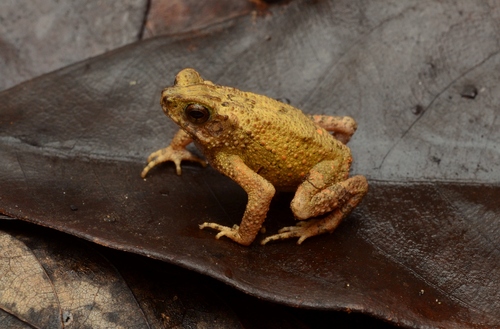
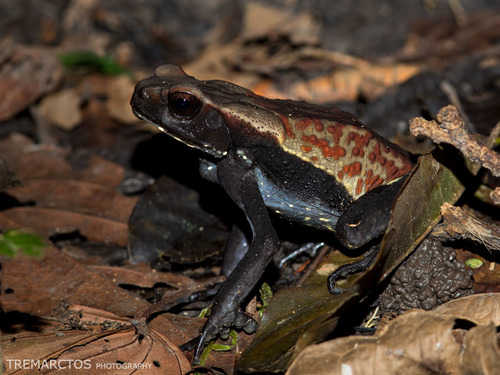
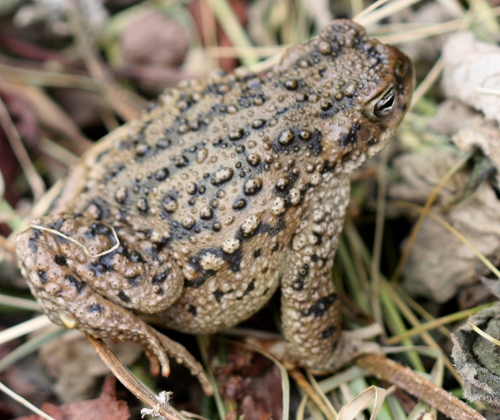
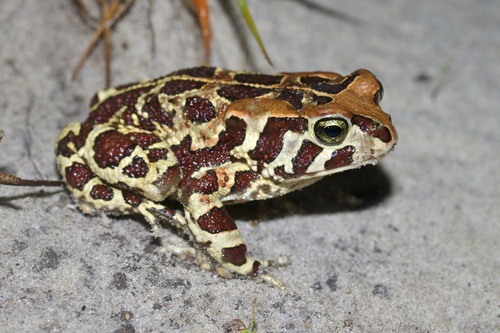
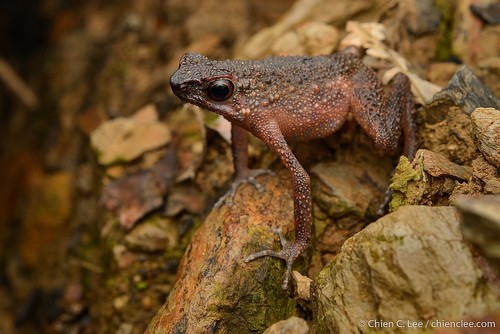
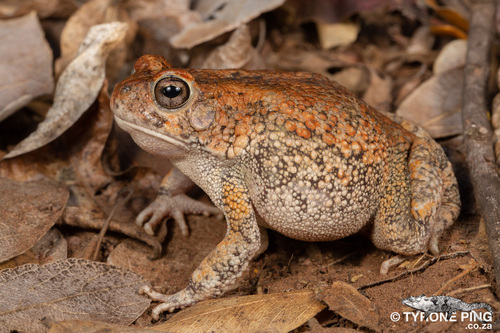
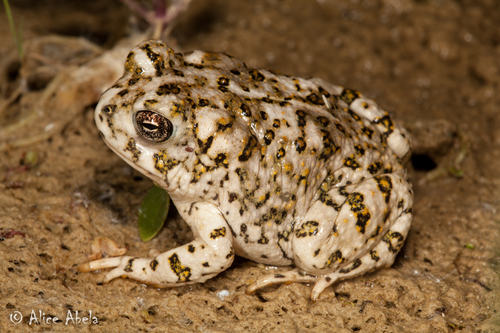
Anaxyrus californicus (Camp, 1915), commonly known as the arroyo toad, is a stocky, blunt-nosed toad species with warty skin, measuring 5 to 7.5 cm (2.0 to 3.0 in) in length. It has horizontal pupils, and its dorsal surface is greenish, grey, or salmon, with a light-colored stripe running across its head and eyelids. It also has light sacral and mid-dorsal patches, large, oval, widely separated parotoid glands, and weak or absent cranial crests. Juvenile arroyo toads have an ashy-white, olive, or salmon dorsal side, which may or may not have black spotting, and they have red-tipped tubercles on their backs. For distribution and habitat, the arroyo toad is found in Southern California from Santa Barbara County south into northwestern Baja California, where it prefers sandy or cobbly washes with swift currents, along with associated upland and riparian habitats. The toad inhabits areas alongside creeks and rivers with shallow pebble-like rocks near sandy terrain, and primarily occupies areas with very little to no vegetation. Adults use sandy soil for protection, shelter, and egg deposition. An arroyo, also called a wash in the desert, is a mostly dry creek or river bed that only fills and flows temporarily during specific seasons after sufficient rain. The arroyo toad acts as an important indicator species in Southern California ecosystems, where its presence or absence signals the overall health of its habitat. The arroyo toad's breeding season falls in late winter and early spring, following seasonal rains. Males choose spots near rivers or water banks, where they call to attract females. Mating occurs in amplexus, after which the female returns to the waterside location to lay her eggs. Eggs are laid in a two-row formation, with an average clutch size of 4,700 eggs. Placement of eggs close to water is critical: eggs too far from water will dry out and die, while eggs that fall into deeper water may be eaten by predators. Surviving eggs hatch between four and six days after laying.