About Anatrachyntis badia (Hodges, 1962)
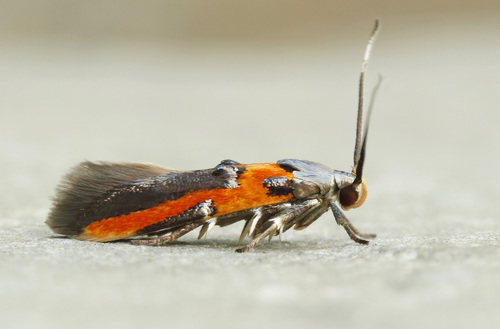
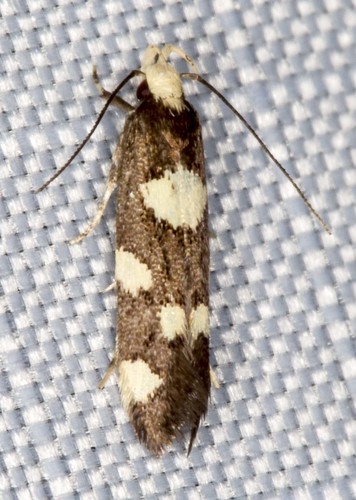
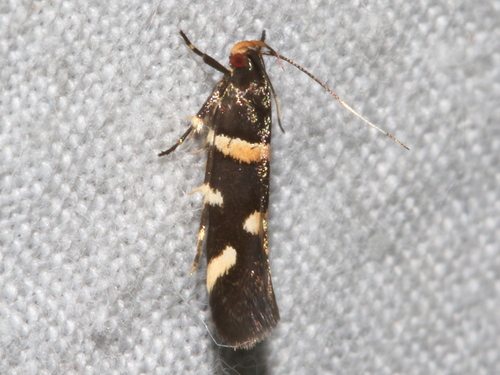
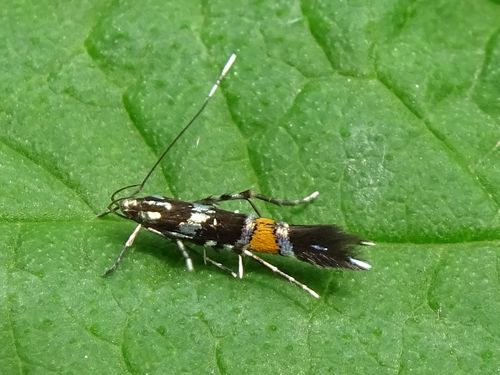
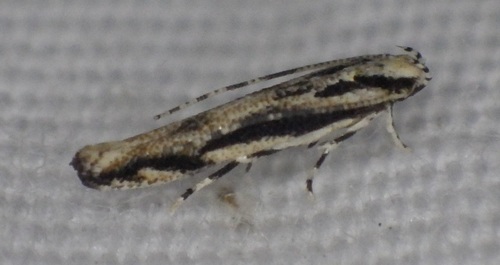
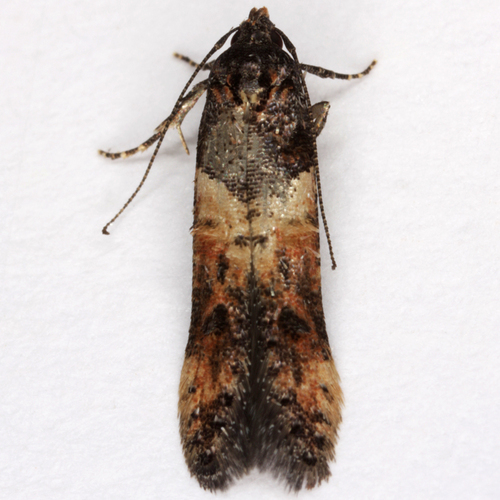
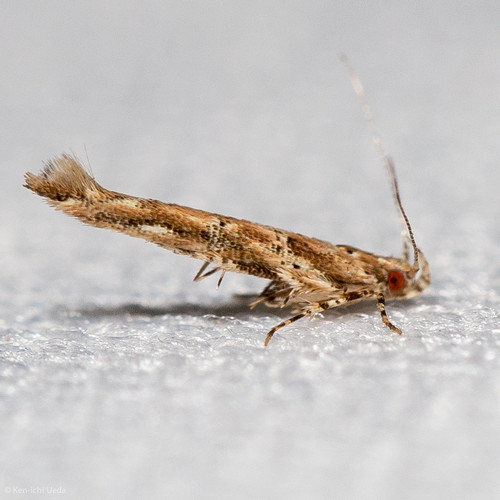
Anatrachyntis badia, commonly known as the Florida pink scavenger, is a moth species belonging to the family Cosmopterigidae. It was first formally described by Ronald W. Hodges in 1962. In the United States, this species is native to the southern region, ranging from Florida to California, and extends north as far as Maryland. It is an introduced species in Europe, where it has been rarely recorded in Italy, Greece, Spain, Malta, the United Kingdom, Poland, and Turkey. These European records stem from accidental importation of the species alongside pomegranates. In Germany, the species was first recorded in 2011 inside a tropical greenhouse at a zoological garden. At this location, caterpillars were found living in colonies of the mealybug Palmicultor lumpurensis that were feeding on bamboo. The species has also been recorded from Hawaii. The wingspan of adult Anatrachyntis badia measures 9–10 mm (0.35–0.39 in). The larvae of this species are primarily scavengers. They feed on dry or decaying fruit, dead floral structures, and sooty mold that accumulates among fruit clusters and beneath fruit sepals. Larvae have also been recorded feeding on the cones of multiple Pinus species, Cassia seed pods, dead fruits of peach and loquat, lime, grapefruit, banana, cabbage, coconut blossoms, and elm leaves. During the summer months, larvae may nibble the rind of ripe oranges, most often near the stem end or on the sides of fruits growing within a cluster. This feeding activity is typically superficial and does not cause significant damage to the fruit.