About Anasaitis canosa (Walckenaer, 1837)
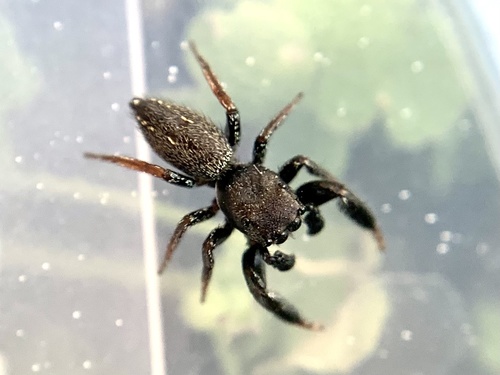
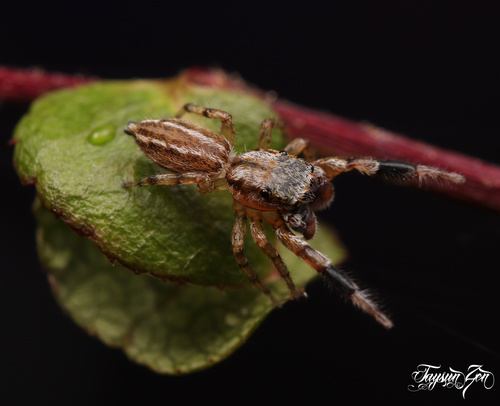
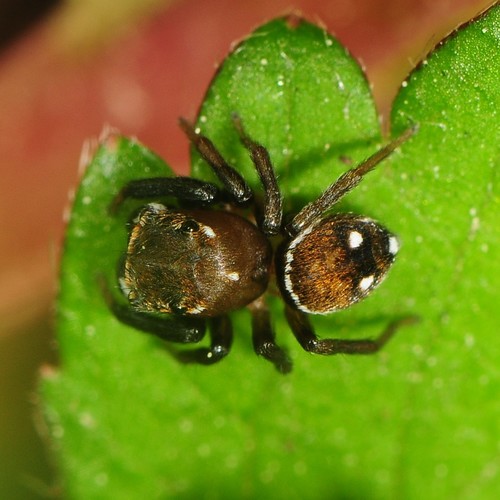
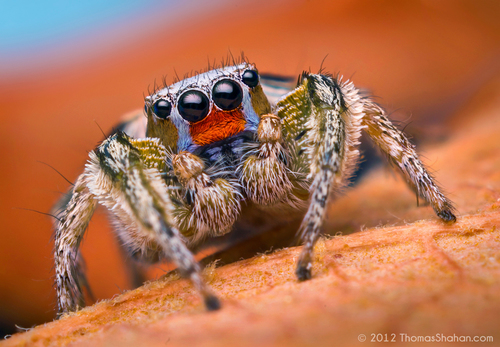
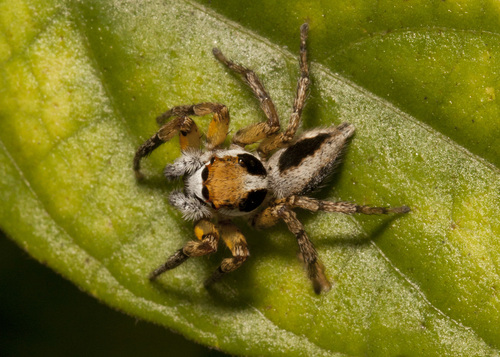
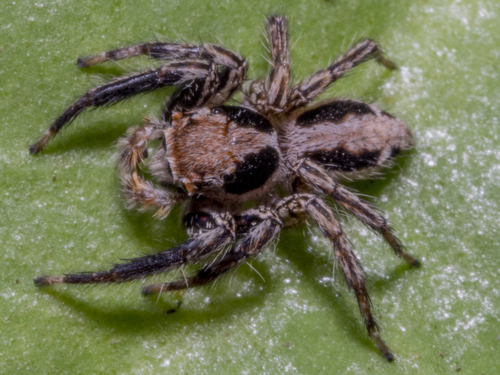
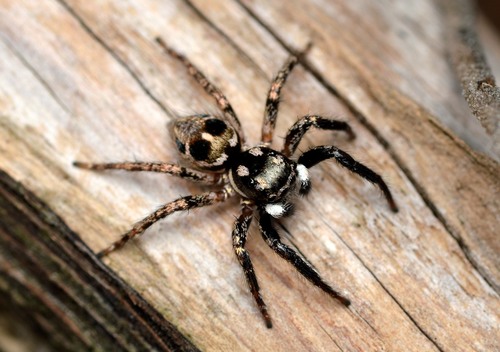
Anasaitis canosa (originally published as canosus in Walckenaer, 1837), previously classified in the genus Corythalia, is a small jumping spider. It is most commonly called the twin-flagged jumping spider, named for the two pennant-shaped markings on the dorsal side of its cephalothorax. This spider can typically be found on top of leaf-litter or on man-made structures such as fences and exterior walls. Like other species in the genus Anasaitis, this species has iridescent setae, often called "scales", that may appear white, green, or pink. These iridescent setae form the species' characteristic "flags" as well as patches on the male pedipalps, which are used for courtship and intraspecific signaling. Adults of this species are roughly 5 to 6 mm in total length. The range of A. canosa extends along the Gulf of Mexico from Mexico to South Carolina in the United States. For reproduction, females lay their eggs inside a silk hide or nest, and they guard the eggs until they hatch. Each reproductive event produces a clutch of around fifteen spiderlings. Males use their anterior-most pair of legs to perform a mating display. Initially, males hold these darkened legs laterally while maneuvering to face the female directly. When the male moves within reach of the female, he uses these legs to touch the female on her dorsal side.