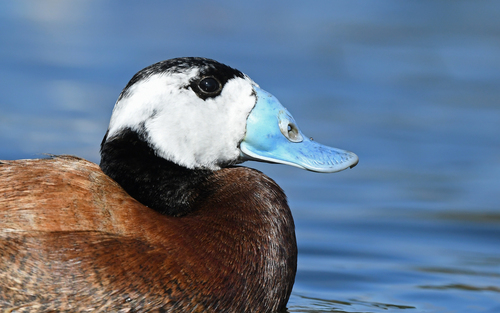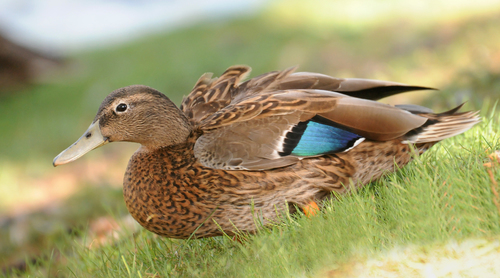
About Anas wyvilliana P.L.Sclater, 1878
The Hawaiian duck (scientific name Anas wyvilliana), also called koloa, is an Anatidae bird species endemic to the large islands of Hawaiʻi. Taxonomically, it is closely related to the mallard (Anas platyrhynchos). It differs from the mallard in being monomorphic (males and females have similar markings) and non-migratory. Like many Anas duck species, Hawaiian ducks can interbreed with mallards to produce viable offspring, and the koloa was previously classified as an island subspecies of the mallard. All major current taxonomic authorities now recognize it as a distinct species within the mallard complex. Recent genetic analyses show it is a distinct species that formed from ancient hybridization between mallards and Laysan ducks (Anas laysanensis). Its native Hawaiian name is koloa maoli, which translates to "native duck", or simply koloa. This species is listed as Vulnerable on the IUCN Red List of Threatened Species, and its overall population trend is increasing. Some Hawaiian duck pairs nest throughout the year, but the main breeding season runs from December to May. During this primary season, pairs often perform impressive nuptial flights. Clutch size is most commonly eight eggs, though a female may lay between two and ten eggs in a well-hidden nest lined with down and breast feathers. Incubation takes approximately four weeks. Ducklings can enter the water shortly after hatching, but do not develop the ability to fly until they are around nine weeks old. Offspring reach sexual maturity and are able to reproduce at one year of age. A major conservation concern for this species is hybridization with mallards. It remains unknown whether female Hawaiian ducks attract male mallards, or male mallards' color variation attracts female Hawaiian ducks. Evolution has not proceeded quickly enough for the species to develop full reproductive isolation, so interbreeding produces viable hybrids. This interbreeding is one of the main drivers of the Hawaiian duck's endangered status. Historically, the Hawaiian duck's range covered all main Hawaiian islands except Lānaʻi and Kahoʻolawe. They were found from hot coastal areas with suitable ponds up to mountain elevations of 7,000 feet (2,130 m), including low wetlands, river valleys, and mountain streams (Perkins 1903, cited in Banko 1987b). It was previously believed that genetically pure koloa populations existed only on Kauaʻi, Niʻihau, and the highlands of Hawaiʻi, with hybrid swarms occurring on Oʻahu and Maui, but new evidence shows hybridization also occurs within these formerly pure populations. The Hawaiian duck was extirpated from all islands outside of this original remaining range, but has since been reestablished on Oʻahu, Hawaiʻi, and Maui through releases of captive-reared birds. All Hawaiian ducks in these reestablished populations have interbred with feral mallards to produce fully fertile hybrid offspring, so pure, unhybridized Hawaiian ducks are now only found on Kauaʻi. The total approximate population of Hawaiian ducks is 2,200 individuals: 2,000 on Kauaʻi and 200 on Hawaiʻi. Even so, pure populations are declining due to ongoing hybridization. Their ground-nesting habit also leaves them vulnerable to predation, as invasive predators including cats, pigs, dogs, and mongooses can easily access their nests. In addition to predation, the loss of lowland wetland habitat on Kauaʻi has negatively impacted local Hawaiian duck populations.