About Anacampsis populella (Clerck, 1759)
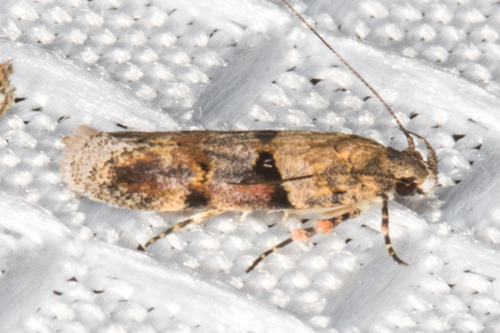
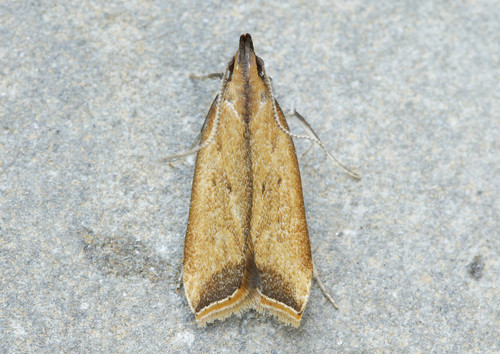
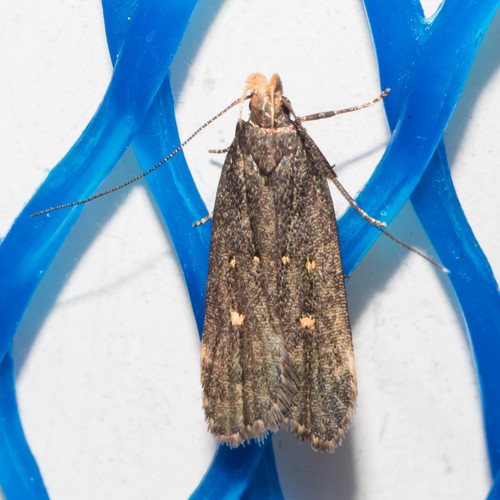
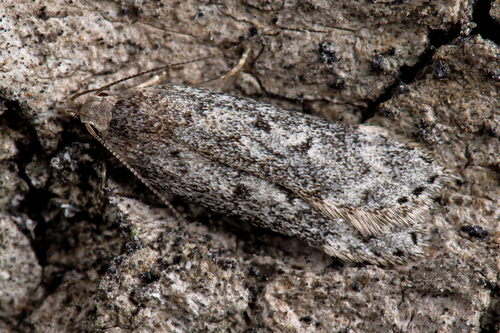
Anacampsis populella is a moth species belonging to the family Gelechiidae. It is native to Europe, and has been accidentally introduced to North America. This species was first described in 1759 by Swedish entomologist Carl Alexander Clerck, and its type specimen originates from Sweden. The larval foodplants of this moth are poplars (Populus species) and willows (Salix species). It is found across most of Europe, in addition to the introduced range in North America. The wingspan of adult Anacampsis populella ranges from 14 to 19 mm. Coloration of the species is variable, and males and females are similar in appearance. Segments 2 to 4 of the abdomen are often ochreous-yellow. Forewings are whitish, and are more or less covered with fine dark specks (irrorated) of black or dark grey, and are usually paler closer to the base of the costa. The costal edge may sometimes have a yellowish tinge. Occasionally, a large black patch covers the dorsal two-thirds of the wing from the base to near the tornus. The stigmata are blackish, and are often concealed. A whitish, obtusely angulated fascia is present at three-quarters of the forewing length, indented above the angle, and is sometimes indistinct. Terminal black dots are present on the forewings. Hindwings are rather dark grey, and have a width greater than their length. The larva is pale grey-greenish or yellowish, with black dots; the head and the sclerotized plate on the second segment are black. It is similar in appearance to the closely related variable species Anacampsis blattariella, and the two can only be distinguished from one another through genitalia dissection. Adult moths are on wing from June to September, depending on location. They can be found on tree trunks, may be dislodged from foliage, or swept from creeping willow (Salix repens). They are also attracted to light.