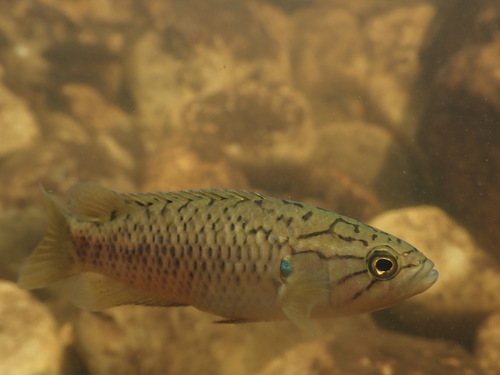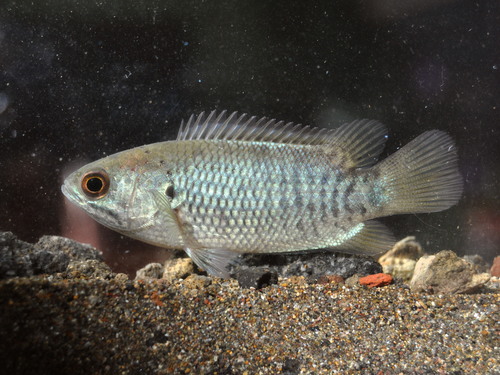
About Anabas testudineus (Bloch, 1792)
The climbing perch, scientifically named Anabas testudineus, is an amphibious freshwater fish species belonging to the Anabantidae family, the group of climbing gouramis. It is a labyrinth fish native to Far Eastern Asia, and lives in freshwater systems spanning from Pakistan, India, Bangladesh, and Sri Lanka in the west, to Southern China in the east, and to Southeast Asia located west of the Wallace Line in the south. Anabas testudineus is likely a species complex, meaning the single binomial name currently covers multiple distinct species. Further research may result in splitting existing populations into separate species and assigning them new individual names. This fish has different common names across regions: it is called "Pothiya" in the Nepalese Terai, "അണ്ടി കള്ളി " (An-Di-Kkalli) in Malayalam, "দেশি কৈ" (Deshi Koi) in Bengali, Kabai in the Maithili language spoken in Bihar, and has multiple common names in Indonesia including betok in Indonesian, běthik in Javanese, and papuyu in Banjarese. The climbing perch is euryhaline, and can reach a total length of 25 cm (9.8 in). Outside of its native range, this species acts as an invasive species. It can survive out of water for between 6 and 10 hours, and moves across land by crawling or wriggling its body using its pectoral fins. It is thought that the fish may spread to new territories by hitching rides on fishing boats. Populations of climbing perch have already become established on some islands east of the Wallace Line, in eastern Indonesia and Papua New Guinea, and the species is believed to be moving toward Northern Australia. In late 2005, the fish was found on Saibai Island and another small Australian island in the Torres Strait of northern Queensland, approximately three to four miles south of Papua New Guinea. The climbing perch is an important food fish in parts of South Asia and Southeast Asia. Its ability to survive out of water for long periods when kept moist makes it easier to sell in markets, improving its marketability.