About Ampittia subvittatus
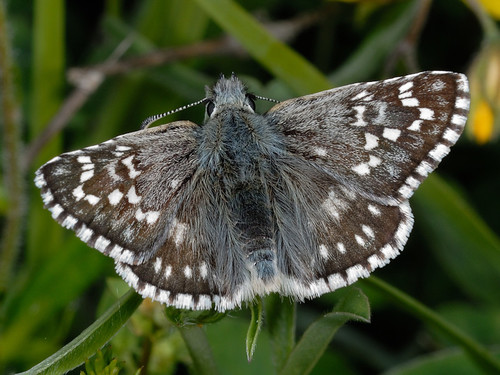
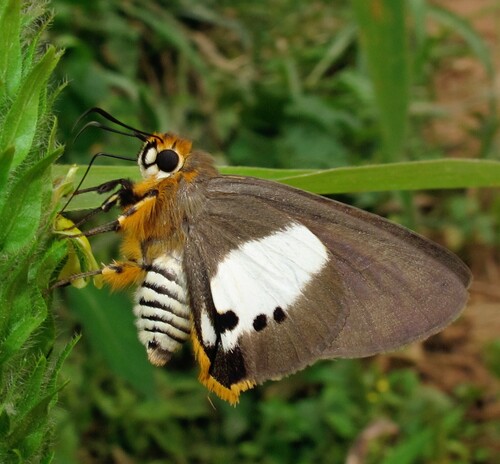
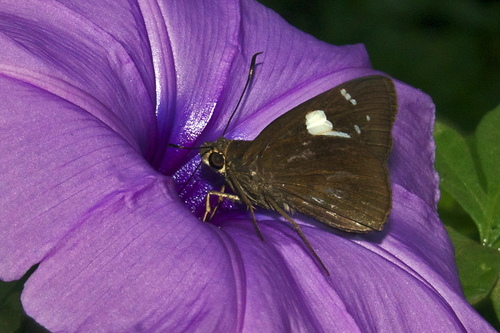
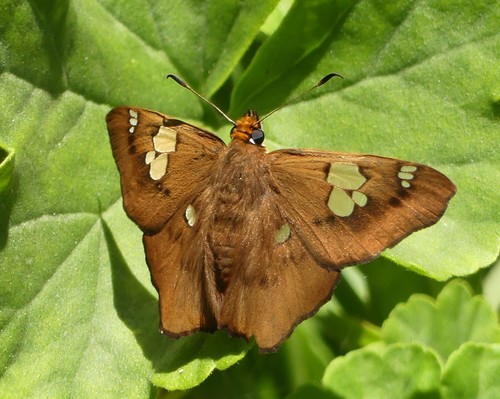
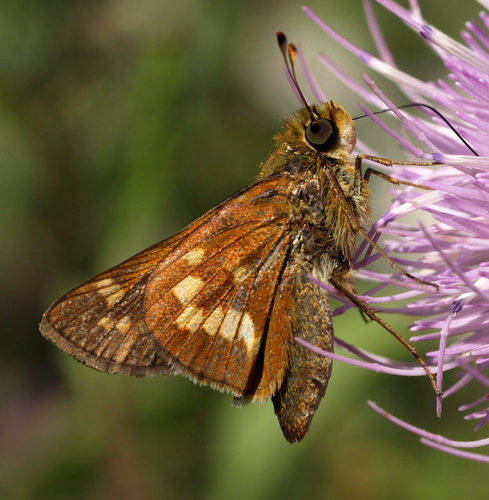
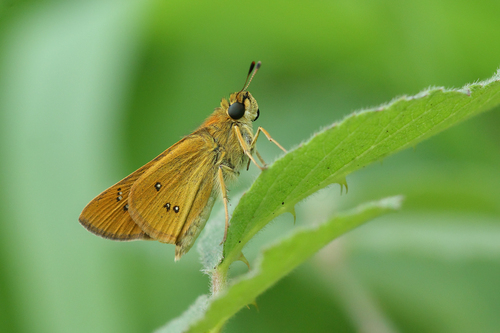
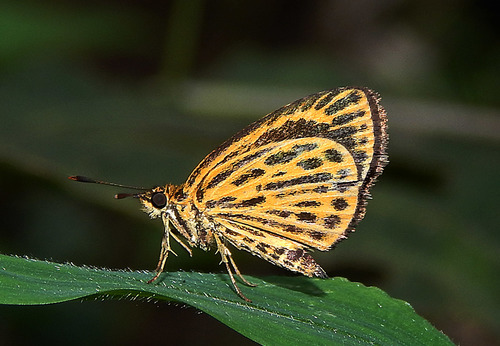
The upperside of both wings of Ampittia subvittatus is iridescent Van Dyke brown. On the forewing, several bright yellow streaks, divided by veins, are positioned obliquely beyond the end of the cell; the forewing may alternatively be entirely immaculate. All cilia are a lighter yellow than the yellow spots (when spots are present) and are broadly interrupted by brown opposite the ends of the veins. On the underside, both wings and the bases of the cilia are uniformly a rich Van Dyke brown, which is darker than the color on the upperside. The veins and wing margins are colored rich chrome yellow. On the forewing, this chrome yellow coloring extends along the costal margin just beyond its middle, along the costal and subcostal nervules to the costal and outer margins, along the extremity of the third median nervule, and along the outer margin. This creates a wing pattern where yellow borders widen from the base to the apex, and widen again from the apex to the sub-median nervule, over a dark brown base. The hindwing has yellow borders, and its yellow veins are broadly edged with yellow on both sides. The upperside of the head, thorax, and abdomen is dark Van Dyke brown, while the underside is yellow. This species is distributed from Sikkim to Arunachal Pradesh in India, and also occurs in Bhutan, Nepal, and multiple locations in Myanmar. Also called the tiger hopper, this species is mostly found in high-altitude evergreen forests that receive abundant rainfall. It prefers to fly close to the ground, with a weak, fluttering flight pattern. It favors shaded or semi-shaded forest tracks. Males are sometimes found puddling on damp soil or wet rock. Females are rarely seen. Individuals have also been observed basking in the sun with their wings open.