About Amphiuma tridactylum Cuvier, 1827
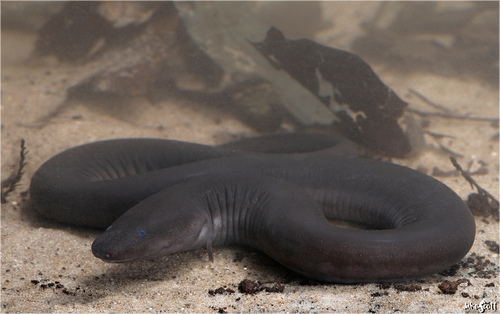
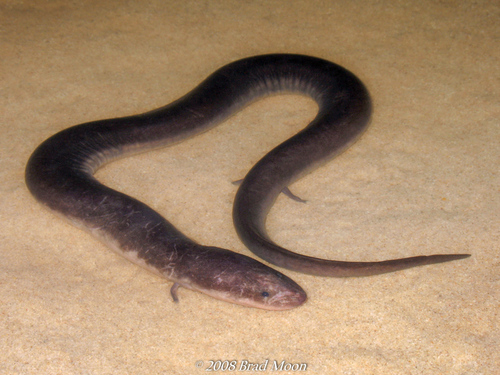
The three-toed amphiuma, Amphiuma tridactylum, has an elongated, eel-like body that is typically dark gray-black or brown, with very small vestigial legs. It is a large species of salamander; the largest recorded specimen measured 41.25 inches (104.8 cm), while the average adult is usually 18 to 30 inches (46 to 76 cm) long. This salamander has small eyes that lack eyelids, gill slits, four tiny legs each bearing three toes, and an average of 62 costal grooves. Three-toed amphiuma is found in the United States, across Gulf of Mexico coastal states ranging from Alabama to Texas, and extending north into Missouri, Arkansas, Tennessee, and Kentucky. It most commonly occurs in bottomland marshes, lakes, seeps, bayous, cypress sloughs, and streams in regions with limestone bedrock. It often lives in crayfish burrows, and can also be found in man-made ditches.