About Amphissa versicolor Dall, 1871
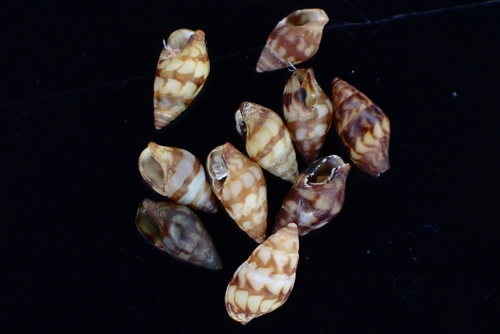
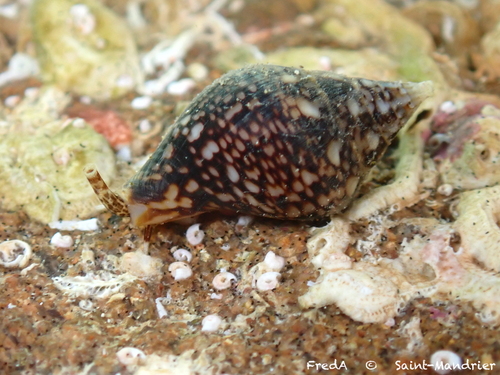
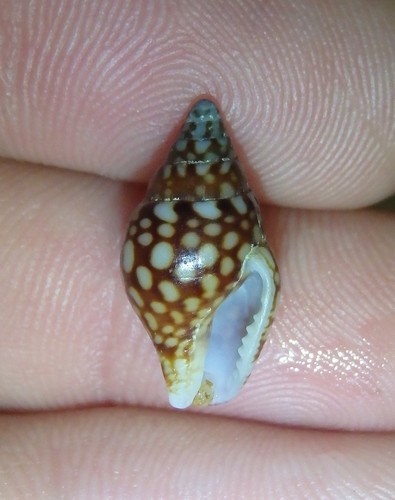
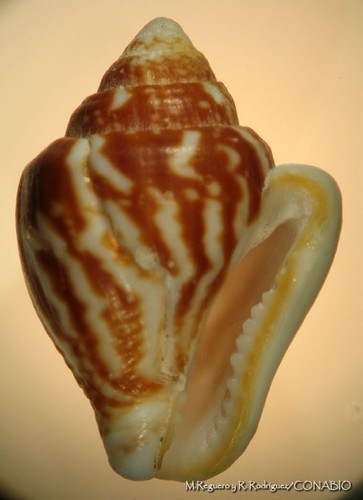
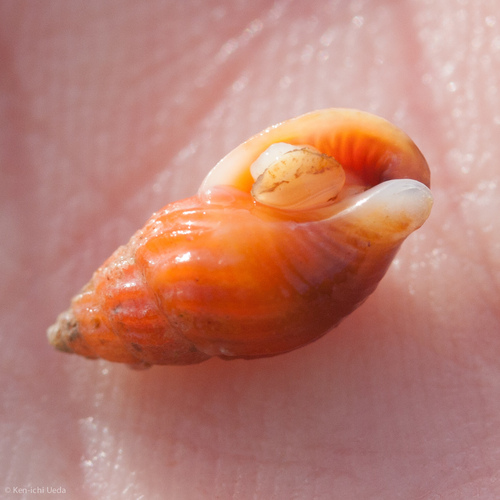
The shell of Amphissa versicolor Dall, 1871 typically has around five whorls, with the body whorl accounting for two-thirds of the shell's total length. The epidermis is imperceptible. The shell is decorated with relatively strong, sinuous ribs that often extend into the lower third of the whorl; fully mature individuals have 14 to 16 of these ribs on the body whorl. The ribs are crossed by fairly strong, thread-like lines that sit between broad channels on the convex surface of the whorls. These lines narrow and become groove-like on the anterior section of the body whorl, and adult specimens have an average of 17 lines on the body whorl. The post-labial pinch is almost completely absent, and is fully gone in some specimens. The species' shell color is highly variable, ranging from pink, salmon, livid bluish purple, and brown to pure white. Any of these base colors can be plain, or marked in various ways with a network of white and brown lines, patches, or dots. The shell is an elongated spiral that grows up to 13 millimetres (0.51 in) long and displays many different colors, which can range from white to brown and sometimes include darker markings. This species is native to Eastern Pacific coasts, ranging from the Queen Charlotte Islands, British Columbia, to Rompiente Point, northern Baja California Sur. It occurs from the low intertidal zone down to depths of approximately 46 metres (151 ft).