About Amphiodia occidentalis (Lyman, 1860)
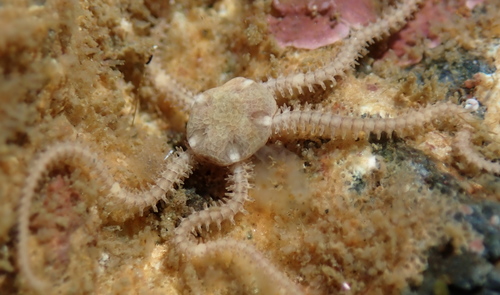
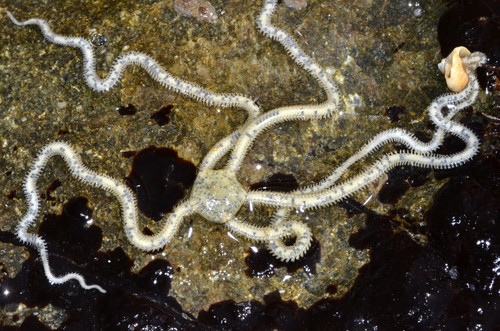
Amphiodia occidentalis, the western brittle star, shows the pentaradial symmetry typical of all brittle stars. It has a flat, organ-containing disc that can reach up to 11 mm in diameter. Five long, segmented arms extend outward from this central disc; the arms are at least eight times as long as the disc’s diameter, and are covered in flattened spines and tube feet. This species has a calcium carbonate endoskeleton made up of calcareous ossicles. Its central nervous system is highly metameric, with the same pattern of peripheral nerves repeated in each individual arm. Amphiodia occidentalis is dioecious, with separate male and female individuals, and reproduces as a broadcast spawner. Adults release eggs and sperm directly into the water column, where fertilization takes place, and larvae develop as part of the plankton. This species has periodic breeding cycles, with the highest levels of spawning activity occurring during winter and spring.