About Amphioctopus marginatus (Taki, 1964)
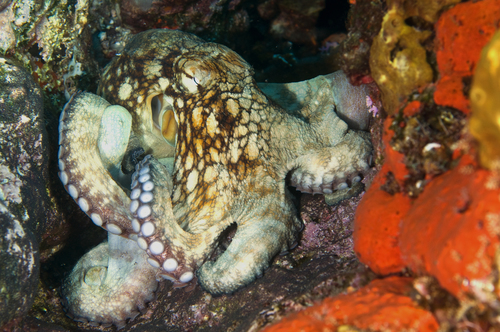
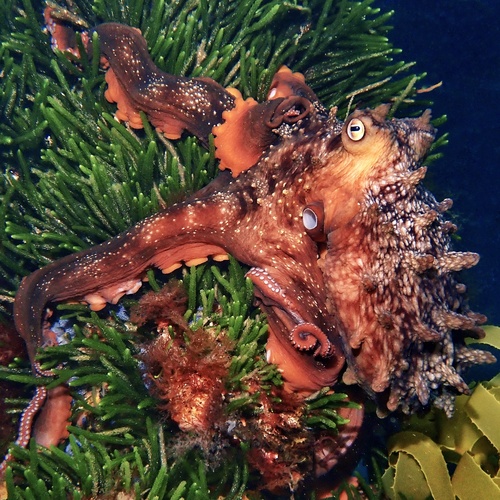
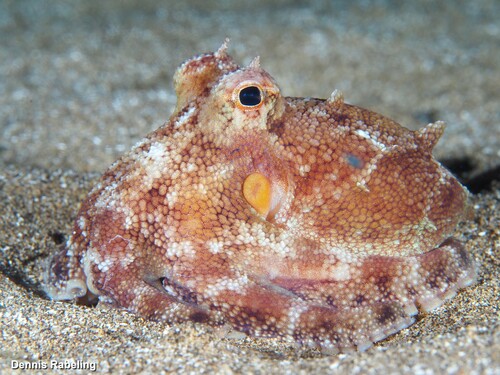
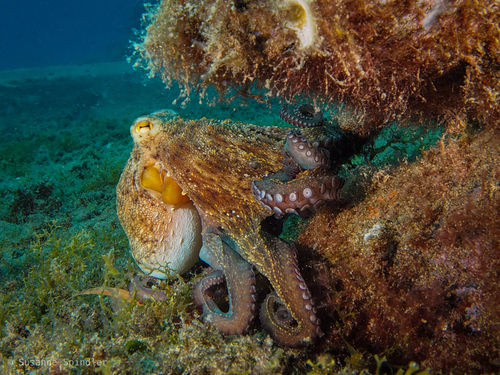
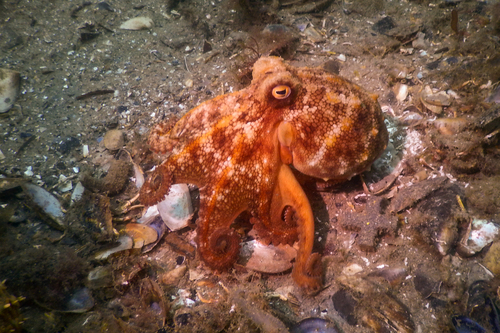
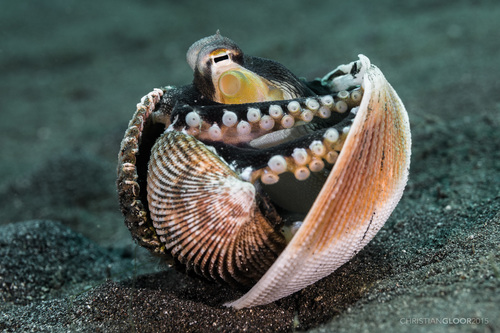
Amphioctopus marginatus, commonly known as the coconut octopus, has a main body that typically measures 5 to 10 centimeters (2 to 4 inches) long. When including its arms, the total length can reach approximately 30 centimeters (12 inches), and the octopus can weigh up to 400 grams (14 ounces). This species has a characteristic color pattern with dark, branching, vein-like lines. Its arms are usually dark, with light-colored suckers that create a sharp contrast. In most color displays, a lighter triangular patch is visible directly below the eye. In 2017, the complete mitochondrial genome of A. marginatus was successfully sequenced, which confirmed the species is closely related to Amphioctopus aegina. The coconut octopus is widely endemic to neritic tropical waters, including the Indian Ocean, Red Sea, Northwest and Western Pacific Ocean, and Southeast Asian Sea. It prefers shallow subtidal waters along the continental shelf, with a maximum recorded depth of 190 meters (620 feet). It is most often found on mud and sand substrates. Large populations of coconut octopuses are frequently found in sandy areas with abundant litter that the octopuses can use for shelter. This species is listed as Least Concern on the IUCN Red List, and its primary threat is fishing. In 2009, researchers from Australia's Melbourne Museum observed the coconut octopus using tools for concealment and defense by gathering available debris to build shelters. The researchers filmed individuals collecting half coconut shells discarded by humans from the seabed. The octopuses carried these shells up to 20 meters (66 feet) and arranged them around their bodies to form a spherical hiding place similar to a clamshell. This behavior, observed in specimens from Bali and North Sulawesi, Indonesia, is considered the first evidence of tool use in invertebrates. While other octopus species had previously been observed using shells for shelter, this was the first recorded case of octopuses collecting and preparing shells for later use, which the Melbourne Museum classifies as "true tool use". Coconut octopuses often move bipedally when carrying stacks of debris or objects larger than their own body. They use a wide range of materials for shelter, including natural coconut shells, clamshells, and man-made litter such as bottles.