About Amphicarpum muehlenbergianum (Schult.) Hitchc.
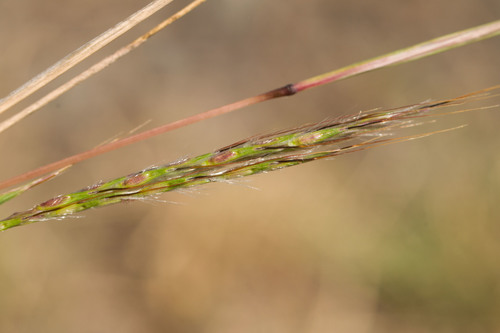
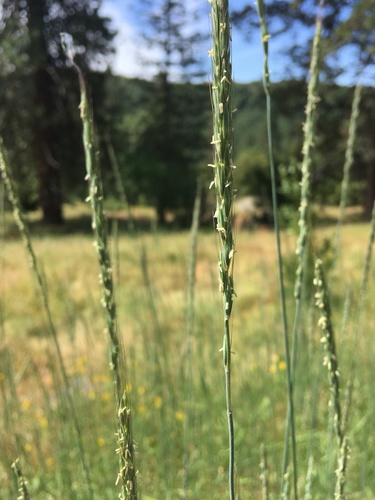
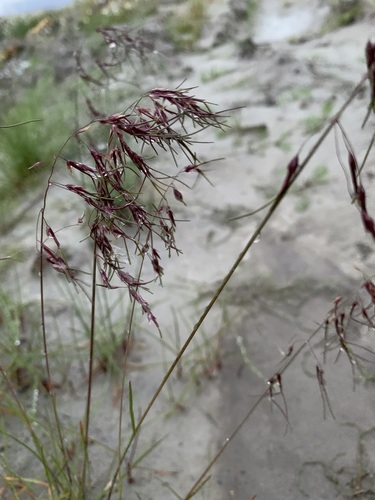
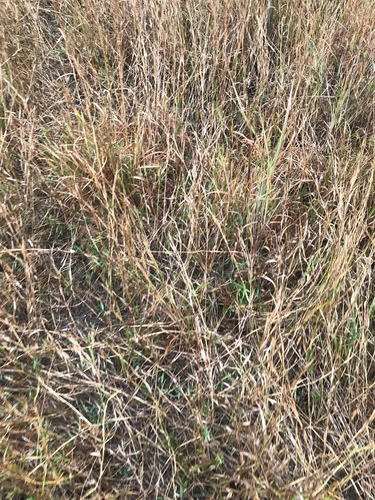
Amphicarpum muehlenbergianum (Schult.) Hitchc., often misspelled A. muhlenbergianum, is a grass species with the common names blue maidencane, Muhlenberg maidencane, and goobergrass. It is native to the southeastern United States. This perennial grass grows from a rhizome, and produces decumbent stems that spread along the ground and root at nodes that touch the substrate. Stems can reach up to one meter in length. Leaves are distributed evenly along the stems. The firm, blue-green lance-shaped leaf blades are up to 10 centimeters long and 1 centimeter wide, and they are widest just above the blade base. The margins of the leaf blades are cartilaginous, and turn white when dry. This plant produces two types of flowers: open flowers borne on stem inflorescences, and cleistogamous, unopening flowers that grow underground on white, self-pollinating spikelets. In its native range, this species grows in pine woods, savannas, and wetlands. It can be found in shallow pools and along shorelines, and does not grow in deeper, stagnant water bodies. It forms a thick, rhizomatous root network that effectively resists erosion in wet areas, so it is used for wetland restoration projects. It can tolerate some shade. Plant species commonly associated with it include creeping bluestem (Schizachyrium scoparium) and broomsedge bluestem (Andropogon virginicus) in flatwoods habitats, alongside wiregrass (Aristida stricta), switchgrass (Panicum virgatum), bottlebrush threeawn (Aristida spiciformis), hairy blustem (Andropogon longiberbis), and bluejoint panicum (Panicum tenerum). This grass serves as good forage for cattle and wild ungulates, and can produce 4000 pounds of palatable forage per acre.