About Amphibalanus improvisus (Darwin, 1854)
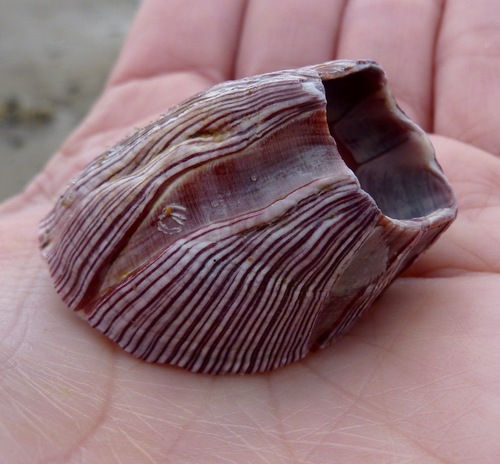
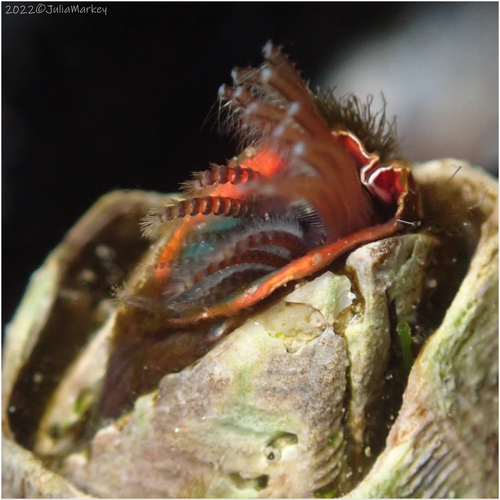
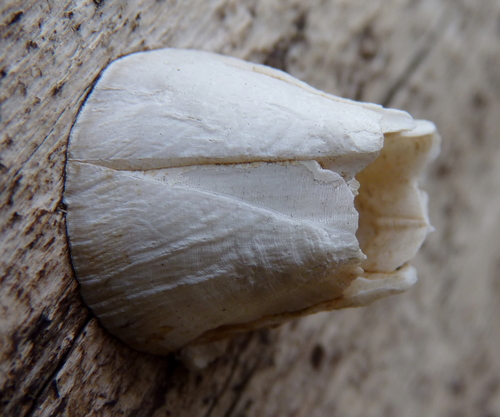
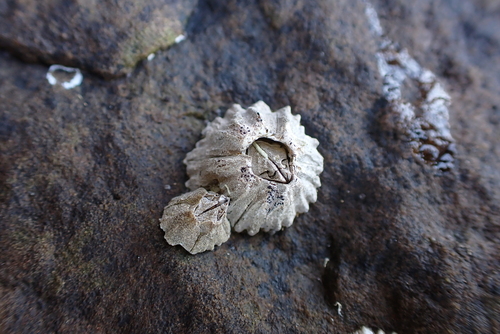
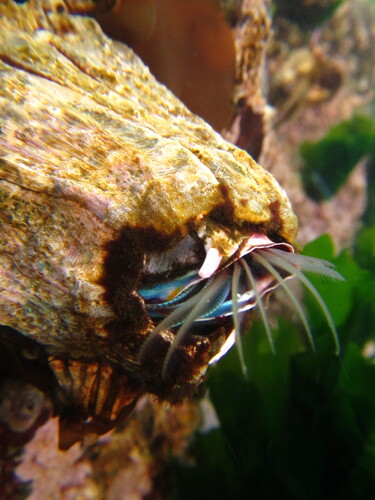
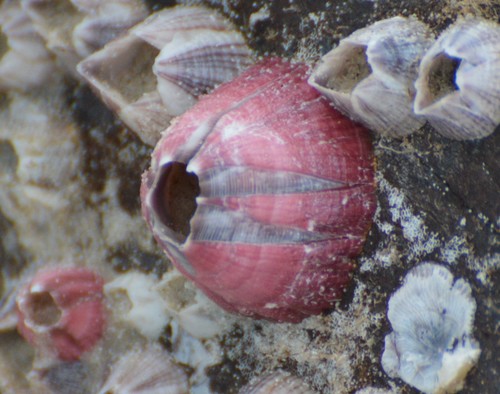
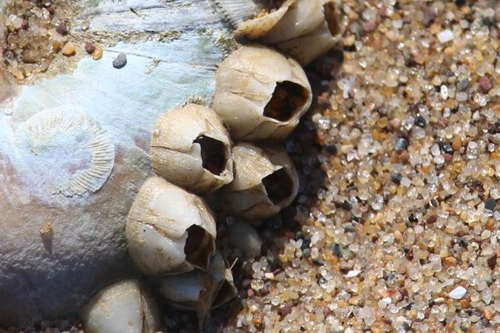
Amphibalanus improvisus has a smooth, white or pale grey conical calcareous shell formed from six fused plates. An oval or rhombic opening at the top is closed off by two hinged plates. Most adult individuals grow to around 10 mm (0.4 in) in diameter and 6 mm (0.24 in) in width, though they can grow larger, and become taller when growing in dense populations. The base of the shell is characteristically marked with radial grooves. This species can be easily mistaken for the striped barnacle (Amphibalanus amphitrite); in European waters, it can also be confused with the northern rock barnacle (Semibalanus balanoides) and the rock barnacle (Balanus crenatus). Amphibalanus improvisus has a cosmopolitan distribution, occurring in temperate and tropical regions of the Atlantic Ocean, as well as in the Arctic Ocean, Baltic Sea, North Sea, Mediterranean Sea, and Black Sea. The location of the species' original natural range is not confirmed, but it may have originated in North America. It has spread to many other parts of the world's oceans, including the Indo-Pacific and Australasia, as a biofouling organism on ship hulls. It was one of the earliest documented non-native species introduced to the Baltic Sea; it was recorded in Sweden and Lithuania in 1844, the Elbe estuary in 1854, and Great Britain in the 1880s. Amphibalanus improvisus lives at depths down to roughly 6 metres (20 ft), sometimes in extremely large populations. It attaches to rocks, human-made structures, buoys, ship hulls, the shells of crabs and molluscs, and certain types of seaweed. It is known to clog water intake pipes for factories and power stations. It tolerates both high and low salinity levels, so it is frequently found in estuaries and low-salinity bays. As an invasive species, it competes with native organisms, and it is an unwanted coloniser of the shells of cultivated oysters and mussels, and of aquaculture cages.