About Amphibalanus eburneus (Gould, 1841)
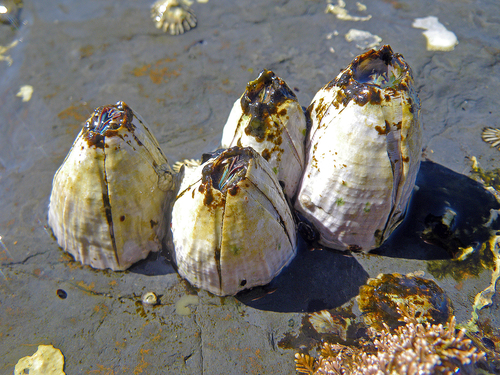
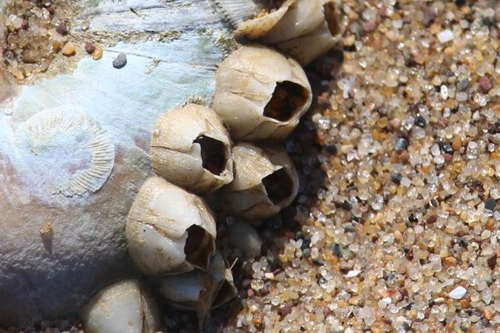
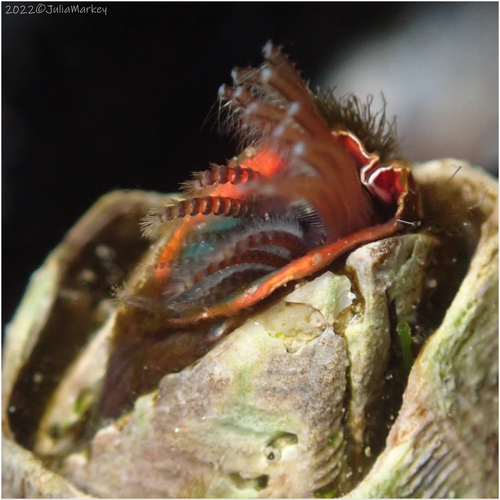
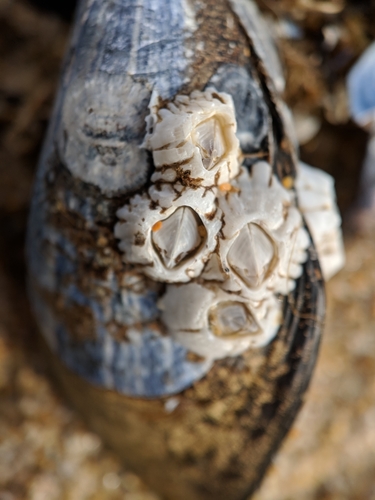
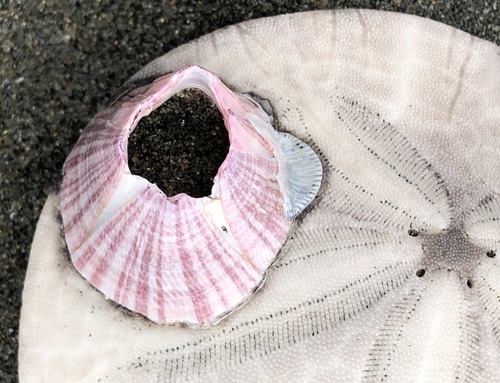
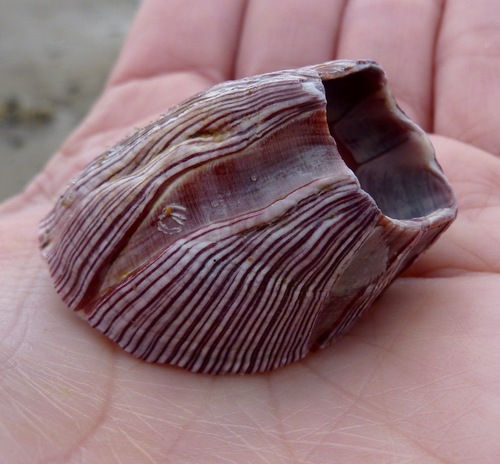
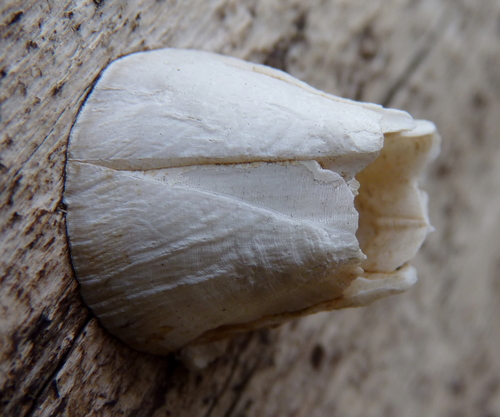
Amphibalanus eburneus, commonly known as the ivory barnacle, is a medium-sized, sessile cone-shaped barnacle. It has a white test made of fused plates, and a diamond-shaped operculum protected by a hinged lid. This lid is formed from two triangular halves, each made up of two plates: a tergum and a scutum. This species can reach a maximum height of 2.5 cm (0.98 in), though most individual ivory barnacles are much smaller. The ivory barnacle can be confused with the white bay barnacle (Balanus improvisus), but that species is smaller, only growing to a maximum height of 6 mm (0.24 in). Another similar species is the striped barnacle (Balanus amphitrite), which can be distinguished by the vertical pink lines on its test. The native range of the ivory barnacle stretches from Nova Scotia to the Caribbean Sea and the Gulf of Mexico. It has expanded its range by fouling ship bottoms, and its larvae are sometimes transported via ballast water. It was first recorded in Pearl Harbor, Hawaii in 1929, and is now common across all of Hawaii’s main islands. It occurs from the low tide mark down to depths of 37 m (121 ft), sometimes growing in large numbers. It attaches itself to hard surfaces including rocks, mollusc shells, pilings, jetties, other man-made structures, ship hulls, and the roots of the red mangrove (Rhizophora mangle). Ivory barnacles typically aggregate into dense populations. Each individual is a hermaphrodite, but fertilization is cross-fertilization. An individual extends its long penis and inserts it into the operculum of a neighboring individual that already holds developed eggs, where it deposits sperm. Fertilized eggs are brooded inside the mantle cavity. When the eggs hatch, larvae are released into the open water and become planktonic. The larvae develop through six naupliar stages and one cyprid stage over one to two weeks. Nauplii feed on phytoplankton, while cyprid larvae do not feed. Cyprids search for suitable settlement sites, potentially by following chemical cues from already settled adult barnacles or by testing the suitability of the substrate. Once a site is selected, cyprids cement themselves to the surface by their heads and undergo metamorphosis into juvenile barnacles.