About Amphibalanus amphitrite (Darwin, 1854)
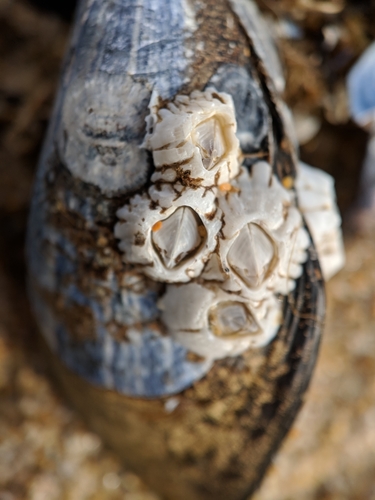
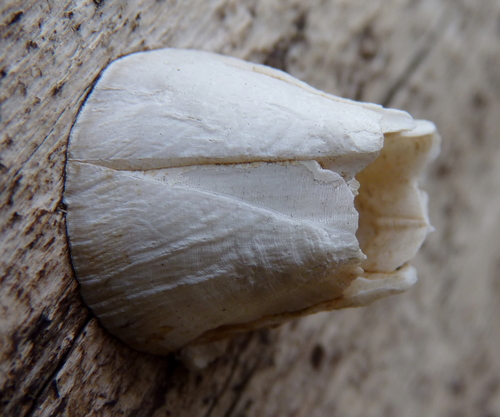
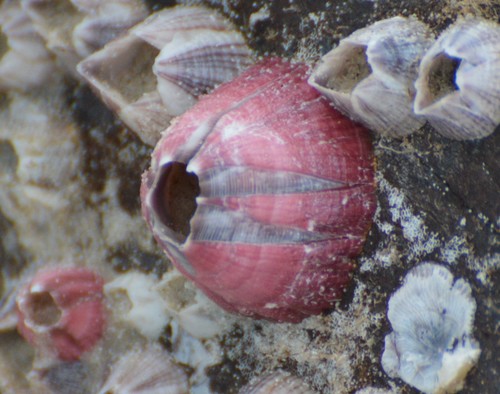
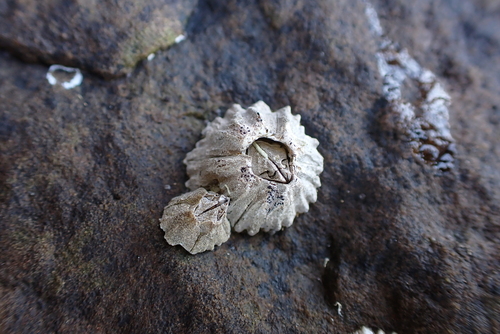
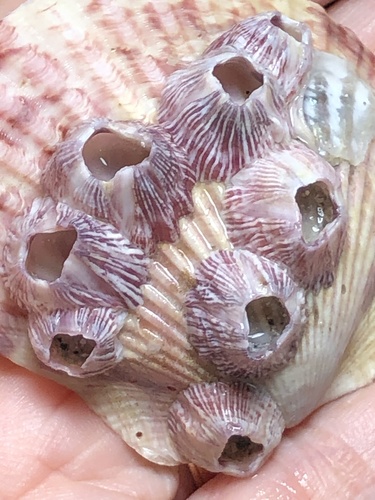
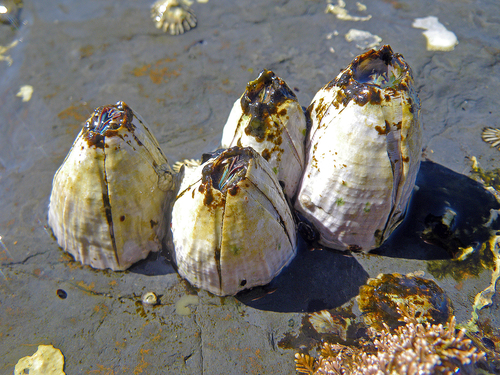
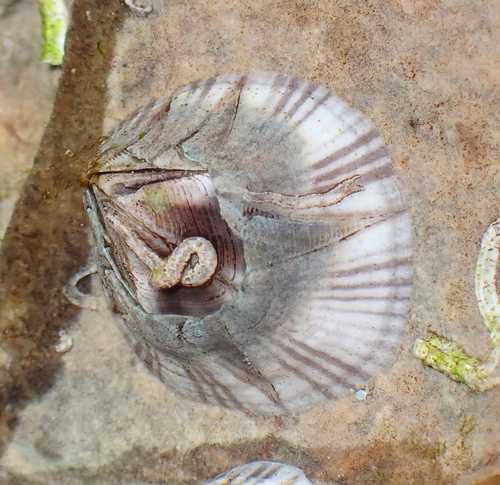
Amphibalanus amphitrite (Darwin, 1854) is a medium-sized, cone-shaped sessile barnacle. It has distinctive narrow vertical purple or brown stripes, and the surface of its test has vertical ribbing. This species has a diamond-shaped operculum, protected by a movable lid made of two triangular plates. Adults grow to approximately twenty millimetres in diameter. The origin of A. amphitrite is not confirmed, but it may have originated in the Indian Ocean or southwestern Pacific Ocean, where fossils of the species have been found. Today, it has spread to most of the world's warm and temperate seas. A. amphitrite is a common coastal and estuarine organism. It grows on hard natural surfaces including bedrock, boulders, mollusc shells, and red mangrove roots, and also grows on artificial surfaces such as ship hulls, pilings, and seawalls. It can reach very high abundance; over three hundred individual barnacles have been recorded on a single eastern oyster (Crassostrea virginica).