About Ampelodesmos mauritanicus (Poir.) T.Durand & Schinz
The genus Ampelodesmos is a group of Mediterranean plants in the grass family, with common names including stramma, Mauritania grass, rope grass, and dis(s) grass. This genus is placed in its own unique tribe, Ampelodesmeae, within the grass subfamily Pooideae. Researchers believe the genus originated through ancient hybrid speciation, from a cross between parent species from the tribes Stipeae and Phaenospermateae.
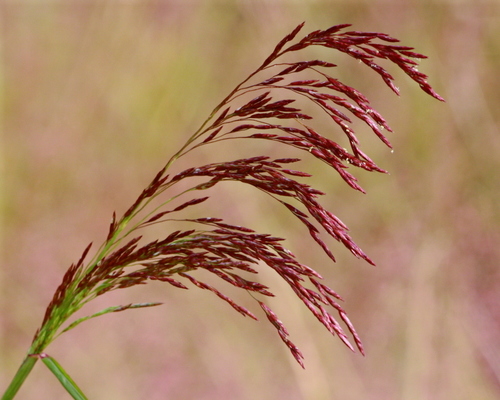
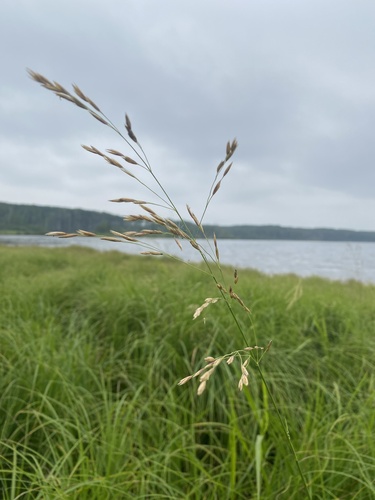
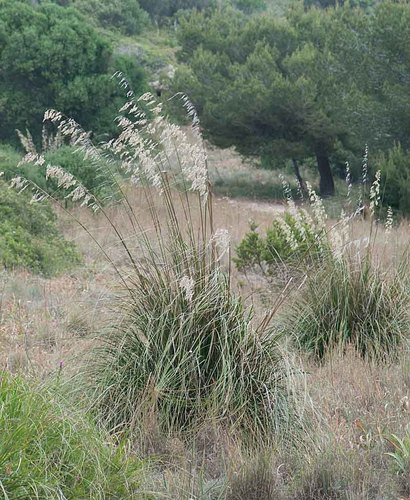
Ampelodesmos mauritanicus is a large clumping perennial bunchgrass native to the Mediterranean region. It has been introduced outside its native range and is grown as an ornamental grass. Its nodding flower panicles can reach nearly two feet in length. Within its native range, the species is harvested for fiber to make mats, brooms, and twine. It can become an invasive species in non-native ecosystems outside the Mediterranean Basin. The edges of this grass’s leaves are sharp, and can cause small cuts on exposed skin.
The genus name comes from the Greek words ampelos, meaning "vine", and desmos, meaning "bond", referencing the plant’s former use as string to tie up grapevines. Currently accepted species in the genus are Ampelodesmos ampelodesmon (Cirillo) Kerguélen, native to Sicily; and Ampelodesmos mauritanicus (Poir.) T.Durand & Schinz, native to Spain (including the Balearic Islands), France (including Corsica), Italy (including Sardinia and Sicily), Greece, Algeria, Morocco, Tunisia, and Libya. Some species formerly classified in Ampelodesmos are now placed in the genus Cortaderia, for example Ampelodesmos australis is now classified as Cortaderia pilosa.