About Amorpha canescens Pursh
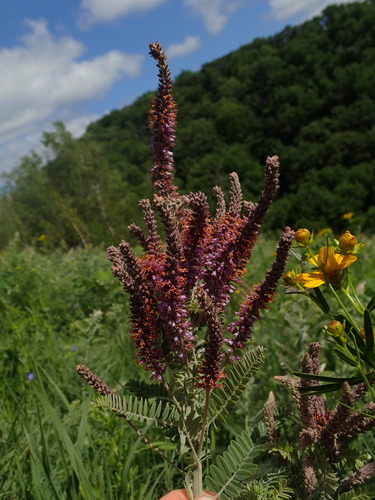
Leadplant, scientifically named Amorpha canescens Pursh, typically grows 0.3 to 1 meter (1 foot 0 inch to 3 feet 3 inches) tall. It can be recognized by its small purple flowers arranged in long spikes, and its grey-green alternate pinnately compound leaflets. The plant produces hairy legume fruits, each containing a single seed. While its flower and leaf arrangement is similar to Amorpha fruticosa, the two species differ in size and habitat preference: A. canescens usually reaches a maximum height of 1 meter (3 feet 3 inches) and favors drier habitats, while A. fruticosa can grow 5 to 6 meters (16 to 20 feet) tall and grows in wetter areas. Amorpha canescens is widespread across North America, ranging from southern Canada south to Texas and New Mexico, spanning west to Montana and east to Michigan. It is most commonly found in dry prairie and savanna communities, and prefers dry, well-drained soils of many textures, including sandy, gravelly, and rocky types. The presence of leadplant indicates land that experiences minimal livestock grazing, is not overgrown, or has undergone regular fire. Leadplant has a variety of uses. Indigenous groups such as the Oglala have used it for medicinal purposes; some tribes used it to treat pinworms, eczema, rheumatism, neuralgia, open wounds, and cuts. Its dried, crushed leaves were made into tea, and were also used to make a smoking mixture when combined with buffalo fat. It provides multiple benefits to the ecosystems it inhabits, including valuable nutrition for grazing animals and soil erosion prevention. It may also be used in landscaping and gardening, because it can fix nitrogen and help prevent erosion. Its nodulated roots host nitrogen-fixing bacteria that support plant growth. West of the Mississippi River in Iowa, Meskwaki women searched for this plant because it was sometimes believed to indicate the presence of lead.