About Ammospermophilus nelsoni (Merriam, 1893)
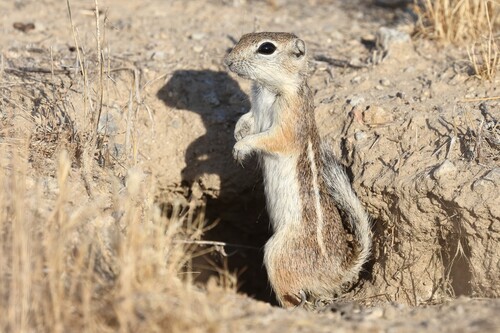
The San Joaquin antelope squirrel, scientifically named Ammospermophilus nelsoni (Merriam, 1893), has a binomial name that commemorates American naturalist Edward William Nelson. In terms of physical characteristics, its upper body and outer leg surfaces are dull yellowish-brown or buffy-clay, with a white belly and a white stripe running down each side of its body, matching the pattern seen in other antelope squirrels. The underside of its tail is buffy white with black edges. Adult males reach an approximate length of 9.8 inches, while adult females are approximately 9.4 inches long. This species is endemic to the San Joaquin Valley of California, where it occurs on slopes and ridge tops along the valley's western edge. Its current distribution is far smaller than its original historical range. After extensive agricultural cultivation spread across the San Joaquin Valley, habitat loss combined with rodenticide use reduced the species' population enough for it to be classified as a threatened species. Most remaining individuals of the species live on the undisturbed original habitat of the Carrizo Plain. The squirrels form small underground familial colonies in sandy, easily excavated grasslands in isolated areas of San Luis Obispo and Kern Counties. Plant species commonly found in its habitat include Atriplex, Ephedra, and some junipers. Colonies typically contain around six to eight individuals, which are not spread evenly across the species' range, with a general density of approximately one individual per hectare. Ammospermophilus nelsoni prefers deep, rich soils because these are easy to dig through in both winter and summer temperatures. While the squirrels may dig to access food, they do not dig their own burrows. Instead, they occupy abandoned burrows originally dug by Dipodomys, or kangaroo rats. Both male and female individuals have home ranges of approximately the same size, around 4.4 hectares, with concentrated areas within each home range where the squirrels spend most of their time.