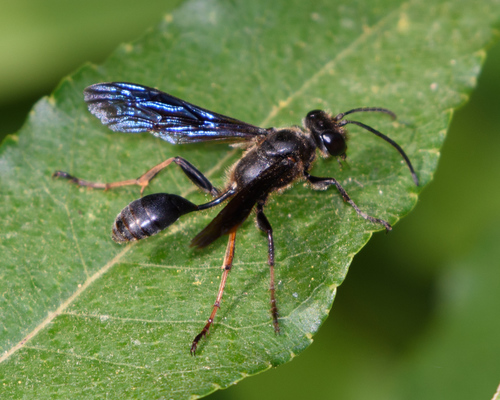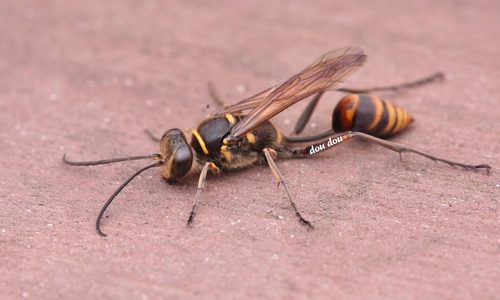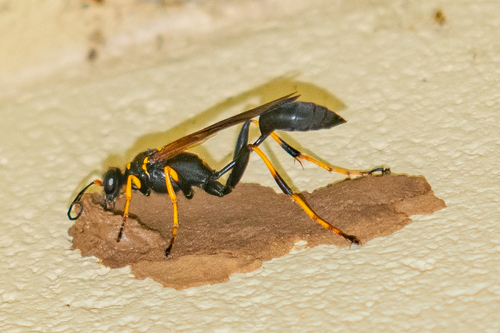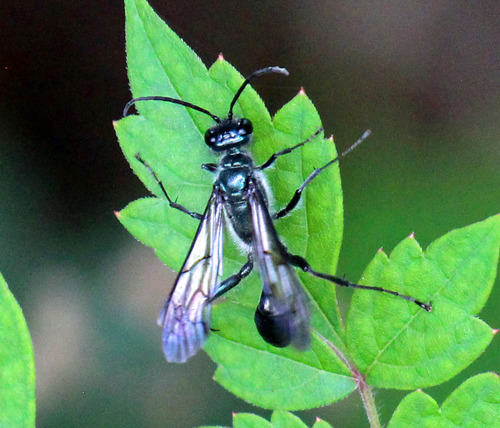
About Ammophila procera Dahlbom, 1843
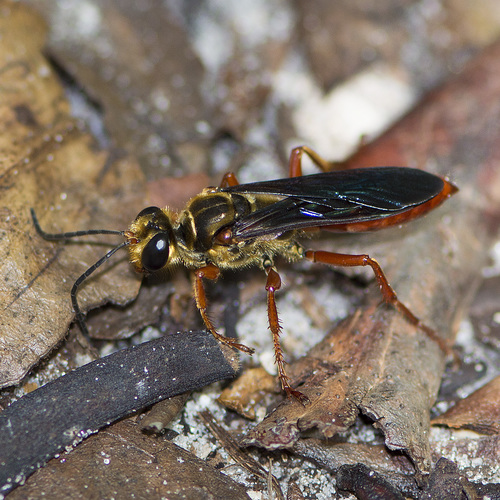
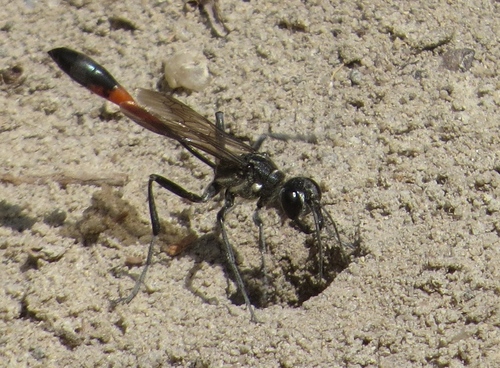
Ammophila procera, commonly called the common thread-waisted wasp, is a species of thread-waisted wasp belonging to the family Sphecidae. It is a widespread common species, with a distribution ranging from southern Canada, through the United States and Mexico, and extending south into Central America. Ammophila procera typically inhabits open areas with soft or sandy soil, which they use to dig burrow nests. Adult females excavate the burrow themselves. Once the burrow is complete, the female seals its entrance and flies around the surrounding area to memorize landmarks including rocks and plants. She uses these memorized landmarks to relocate the burrow when she returns, sometimes even several days later. Next, the female captures and paralyzes prey, most often a moth caterpillar or sawfly larva, then drags the prey back to the burrow. She lays a single egg directly on the captured prey, then seals the entire nest with dirt and debris. Even though females seal their completed nests, some females will hijack the nests of other Ammophila procera, replacing the original egg in the nest with their own. The egg usually hatches after two days. The larva feeds on the stored caterpillar for approximately five days before pupating inside the nest. When it emerges from the nest as an adult, it has fully formed wings. Adult common thread-waisted wasps feed primarily on flower nectar.